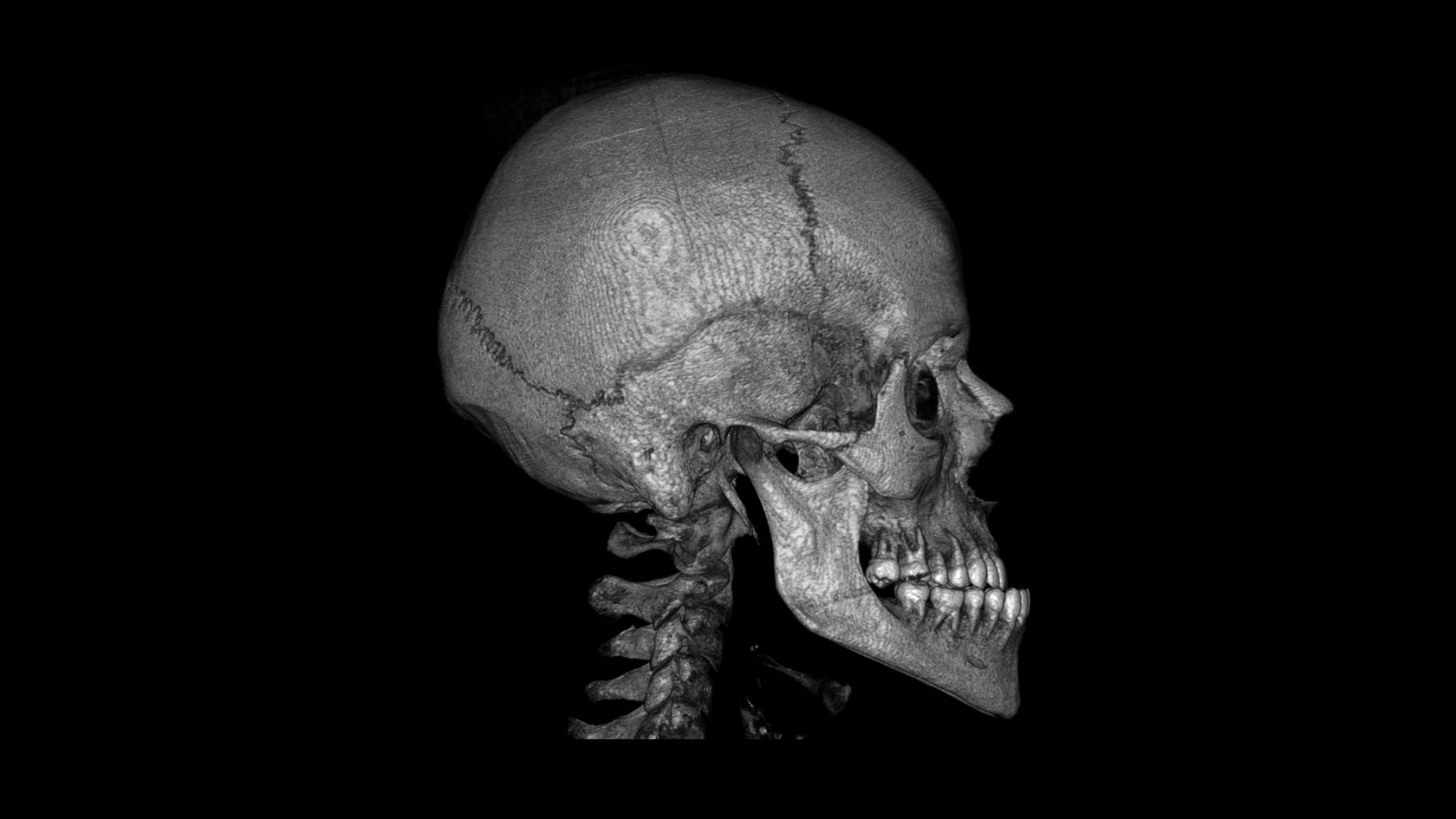
In short: a recessed chin can come from a chin that is small or from a lower jaw that sits too far back (retrognathia). In my practice, most people with a recessed chin actually have a jaw that sits back, and most of them choose to camouflage it by moving the chin forward rather than moving the whole jaw. A simple test at home helps you tell: push your lower jaw forward until you like your profile. If your chin looks right in that position, the problem is where your jaw sits. At ARQÉA, in Barcelona, a genioplasty costs €6,000 and moving the lower jaw (orthognathic surgery) starts at €6,500.
"Is it my chin or my jaw?" is one of the questions I hear most in consultation. It matters, because the answer changes the operation: a small chin is corrected on the chin, and a jaw that sits back is corrected on the jaw. This guide explains how I tell them apart, what each option can and can't do, and when genioplasty (chin surgery) is enough.
Chin or jaw: how to tell
Start with a test you can do in front of a mirror. Look at yourself in profile and slowly push your lower jaw forward until you like what you see. If the size of your chin looks right in that forced position, the problem is not the chin: it's where your lower jaw sits. If it is the upper jaw that sits back, flattening the area beside the nose, that is a recessed maxilla, which I explain separately.
Your bite alone doesn't settle it. Today most patients had orthodontic treatment as children or teenagers, and braces can compensate the teeth so that the bite looks normal even when the jaw sits back. So in consultation I look for those dental compensations, and also at the shape of the jaw itself.
The lips tell me a lot too. The position and size of the upper lip often depend on the support the teeth give it, and the same goes for the lower lip. A deep fold between the lower lip and the chin, a lower lip that turns out a lot, or lower teeth that show when your face is at rest are all signs of how your jaws relate to the rest of your face.
To decide, I plan on a CT scan and simulate the movement in 3D, so you can see the difference between moving only the chin and moving the jaw. We explain how in our post on 3D surgical simulation.
Your options, and what each one can do
There are four ways to bring a recessed chin forward. They don't do the same thing, and the right one depends on what is set back and what you want to change.
| Option | What it does and when I use it | Price at ARQÉA |
|---|---|---|
| Genioplasty (chin osteotomy) | Moves your own chin bone forward, usually 4 to 8 mm, in any 3D direction. It can also reduce volume. The usual choice when the chin is small, and the usual way to camouflage a jaw that sits back. | €6,000 |
| Chin implant | Adds volume with a new shape, for example a squarer chin. It doesn't move the jaw. | €5,000 + VAT |
| Orthognathic surgery | Moves the lower jaw (or both jaws, with or without the chin) forward. It corrects the bite and the profile, and widens the airway. | Lower jaw €6,500; both jaws €12,000; both jaws and chin €13,500 |
| Hyaluronic acid filler | Adds temporary projection that is reabsorbed and doesn't correct the bone or the jaw. At ARQÉA I don't consider it an option for a recessed chin. More in chin filler or surgery. | Not offered at ARQÉA |
All surgical prices include general anaesthesia, the hospital and the follow-up visits. Genioplasty and orthognathic surgery are VAT exempt; a chin implant is cosmetic, so VAT is added. You can work out combinations with our price calculator.
Genioplasty: how far the chin can move
In a genioplasty I cut the lower part of the chin bone and move it to where it's needed. How far it can go depends on your anatomy. Most advancements are between 4 and 8 mm, but I can advance as far as the width of the bone allows, because the segment I move has to stay in contact with the rest of the jaw to heal.
A genioplasty can move the chin in any direction in 3D, and it can also reduce its volume. An implant is the option when the change in shape means adding volume, for example to make the chin squarer. I explain that choice in detail in genioplasty or chin implant.
Why many people camouflage the jaw with the chin
Most of the recessed chins I see need the whole lower jaw to move forward. Even so, only a minority of those patients choose jaw surgery. Most prefer to camouflage it: they bring the chin forward with a genioplasty, which improves the profile without changing the bite.
Both choices are reasonable, as long as you know what each one does. Camouflage changes how your profile looks; moving the jaw also changes where your teeth meet and the space behind your tongue. That second point matters if you snore or have sleep apnoea.
Recessed chin, airway and sleep apnoea
Most people who have diagnosed sleep apnoea and a recessed chin are candidates for trimaxillary surgery: moving both jaws forward and the chin with them. On its own, the chin has little impact on apnoea, but together with the rest of the advancement it is essential.
Moving both jaws forward is an effective treatment for obstructive sleep apnoea. In a meta-analysis of 518 patients, it reduced the number of breathing pauses per hour by about 80 % on average, and 85.5 % of patients met the criteria for surgical success (Zaghi et al., 2016). The diagnosis comes from a sleep study, and the decision is made together with your sleep specialist.
If it's the jaw: do you need braces?
Usually, yes. In a few cases we can assess whether the jaw can be moved forward without orthodontics, but they are the minority: it's rare for someone who bites well to keep biting well after the jaw moves forward. Every case is assessed with orthodontists I trust. If you are in the UK and wondering about the public route, read jaw surgery on the NHS or private.
You can see how jaw surgery works, and its full price list, on our page about orthognathic surgery in Barcelona.
Recovery and time off work
A genioplasty is done through a small incision inside the mouth, with dissolvable stitches, so there is no scar on the face. Plan on 2 or 3 days off work, a week at most. With orthognathic surgery, plan on 3 to 4 weeks. You can lead a normal life (walking, talking, eating soft food) from the first day. We go through the weeks after jaw surgery in how long recovery from jaw surgery really takes.
Frequently asked questions
How do I know if it's my chin or my jaw?
Look at yourself in profile and push your lower jaw forward until you like your profile. If your chin looks the right size in that position, the problem is where your jaw sits. In consultation I also look at your bite, the dental compensations from past orthodontics, your lips and the shape of the jaw, and I plan on a CT scan.
Can a recessed chin be fixed without surgery?
Hyaluronic acid filler can add some temporary projection, but it is reabsorbed and doesn't move the bone or the jaw. At ARQÉA I don't consider it an option for correcting a recessed chin.
How far can a genioplasty move the chin forward?
It depends on your anatomy. Most advancements are between 4 and 8 mm, but the chin can go as far forward as the width of the bone allows, because the moved segment has to stay in contact with the jaw.
Is a genioplasty or a chin implant better for a recessed chin?
For bringing a recessed chin forward, I usually use your own bone with a genioplasty. An implant is the option when the change in shape means adding volume, for example to make the chin squarer.
Can a recessed chin cause sleep apnoea?
A jaw that sits back can go with sleep apnoea, which is diagnosed with a sleep study. When both are present, most patients are candidates for moving both jaws and the chin forward. The chin alone has little effect on apnoea.
Do I need braces if the problem is my jaw?
Usually, yes. A few cases can be assessed for surgery without orthodontics, but it's rare for someone who bites well to keep biting well after the jaw moves forward. Every case is assessed with an orthodontist.
How much does recessed chin surgery cost in Barcelona?
At ARQÉA, a genioplasty costs €6,000 and moving the lower jaw costs €6,500, both VAT exempt and with general anaesthesia and the hospital included. A chin implant costs €5,000 + VAT.
References
As I always say, this article is for general information and doesn't replace an individual medical assessment.
→ Book your free consultation now