In short: a recessed maxilla (maxillary hypoplasia) is an upper jaw that didn't grow forward enough. It rarely affects only the teeth: it flattens the cheekbones, takes support away from the nose and the upper lip, and often goes with an underbite, although braces can make the bite look normal. Once the upper jaw has finished growing, mewing won't move it. Expanders can widen it in some adults, and bringing it forward takes orthognathic surgery. A cheekbone implant can disguise the cheek, but it doesn't replace moving the jaw.
Many people who search for "recessed maxilla" have already studied their profile in photos, read about it on forums and tried mewing. As a maxillofacial surgeon who has operated on more than 500 jaws, I want to explain what a recessed maxilla really is, how I tell it apart from what only looks like one, and what corrects it.
What a recessed maxilla is
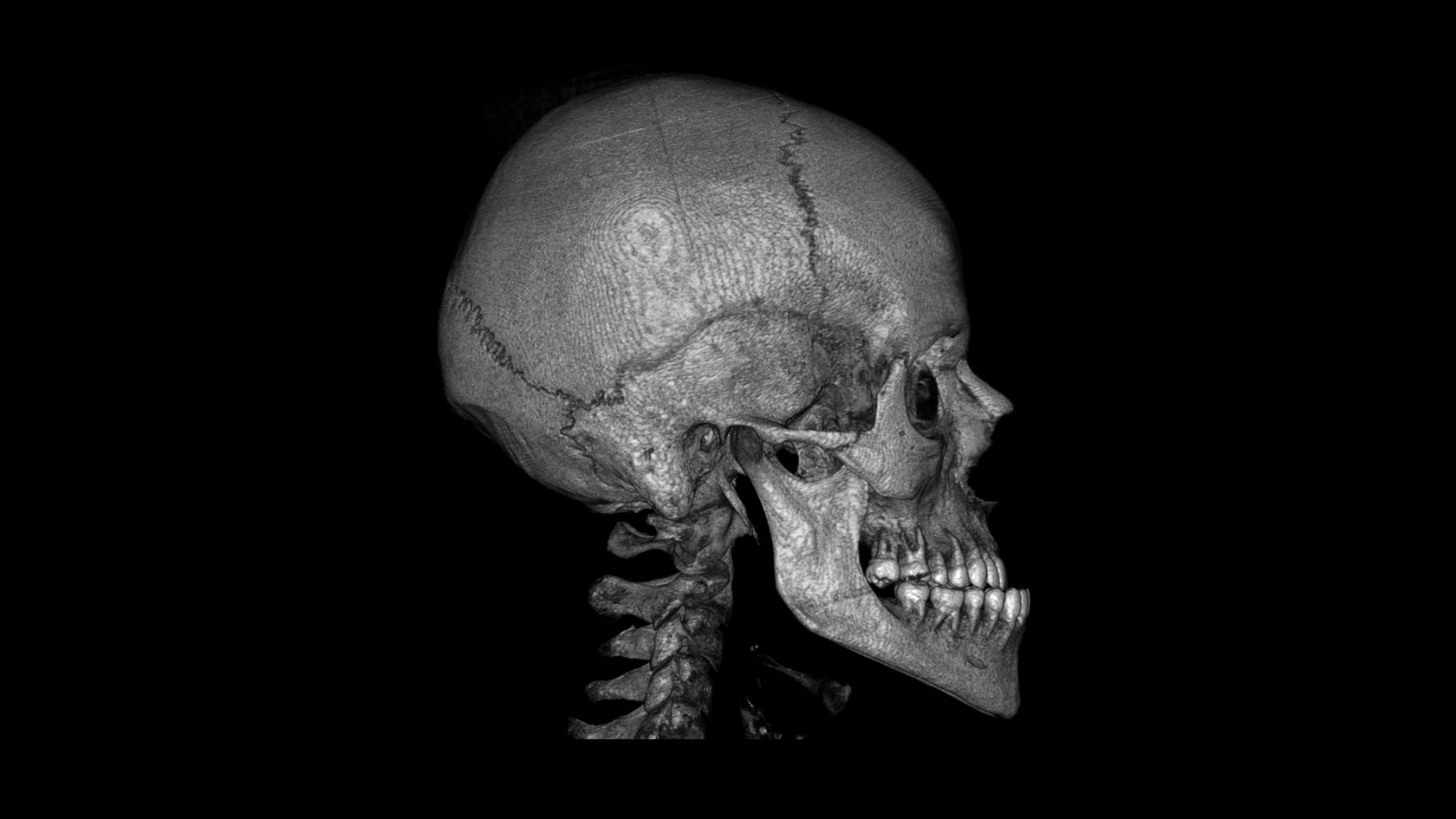
The maxilla is the upper jaw. It holds the upper teeth, forms the palate and the floor of the nose, supports the base of the nose and joins the cheekbones. When it develops too little, mostly forward but sometimes also downward or sideways, we call it a recessed maxilla, maxillary retrusion or maxillary hypoplasia.
It comes from how the face grew. Tongue posture is key while the face is developing, but it is rarely the whole story: it is usually conditioned by problems of the teeth and jaws, or by habits that are easy to detect in childhood and adolescence.
If what sits back is the lower jaw or the chin rather than the upper jaw, that is a different problem, and I cover it in recessed chin: chin or jaw.
How to tell if your maxilla is recessed
In consultation it is usually simple to tell, because a recessed maxilla changes the face in two or three dimensions at once, not only the teeth. In the examination I look at:
- The cheekbones: the area below them looks flat.
- Support for the nose: the base of the nose sits back, and the nose can look larger than it is.
- The area beside the nose: it looks hollow.
- The inside of the nose and the palate: the nasal floor and the palate are often narrow.
- The bite: how the upper jaw relates to the lower jaw, often with an underbite or a crossbite.
A normal bite doesn't rule it out. If the upper jaw sits back, a bite that looks normal is usually normal because the teeth have compensated, often with braces. If your underbite is what bothers you most, read underbite surgery: when you need it and how it is done.
A photo is a starting point, not a diagnosis. I confirm it with an examination and a CT scan, and plan any correction in 3D.
Maxilla, nose or soft tissue: not the same thing
Some people with a flat midface have an upper jaw in a normal position. What they see is the shape of the nose, thin soft tissue or a small cheekbone. The difference shows in the examination: a recessed maxilla changes the palate, the nasal floor and the bite as well, and a nose or soft tissue problem doesn't.
The cheekbone deserves its own mention. The maxilla and the cheekbone are related, like siblings, but they usually need different treatments, which I come back to below.
Does mewing work?
My advice is clear: once your upper jaw has finished growing, don't spend time or money on mewing or facial exercises. Correct tongue posture matters while the face is developing. After that, there is no evidence that it moves the bone, and orthodontists' associations warn that the evidence behind mewing is very thin (American Association of Orthodontists).
And expanders in adults?
Expanders are a different story. Expanders anchored to the bone with miniscrews have a lot of evidence in adults: a meta-analysis found a high success rate in widening the upper jaw, although the studies behind it were of limited quality (Kapetanović et al., 2021). They don't always work, though: it depends on the state of the bone, your age and your bite. And they widen the upper jaw; they don't bring it forward. I always try to choose the least invasive treatment for each patient, but sometimes it isn't possible. When an adult upper jaw can't be widened without help, surgically assisted expansion (SARPE) costs €4,000 at ARQÉA.
When surgery is needed: moving the upper jaw forward
Do I operate on a recessed maxilla when the bite is normal, only to change the face? Without a doubt. If you want to improve how your face looks, the position of your teeth or your breathing, I recommend surgery, or at least orthodontic treatment.
The surgery is called a Le Fort I osteotomy: I cut the upper jaw above the roots of the teeth, move it to its planned position and fix it with plates. It is done through the mouth, so there is no visible scar, and usually together with orthodontics, because moving the jaw changes how the teeth meet. Bringing the upper jaw forward is one of the most stable movements in jaw surgery (Proffit et al., 2007).
How far does it move? There is no average. I don't operate to move a jaw forward 2 mm: every movement needs a reason. Sometimes the case needs little forward movement and something else instead, such as rotating the upper and lower jaws together, correcting a tilt (canting) or an asymmetry. Many cases also move the lower jaw and the chin in the same operation. You can see how it's done, and the full price list, on our page about orthognathic surgery in Barcelona.
What changes in your face and your breathing
When the upper jaw comes forward, it gives back support to the base of the nose, the area beside it, the upper lip and the region under the cheekbones, and it corrects the bite. Moving the jaws forward can also widen the airway behind them. If you snore or have sleep apnoea, the diagnosis comes from a sleep study; I explain how moving both jaws forward treats it in recessed chin: chin or jaw.
Is a cheekbone implant an alternative?
No. A custom implant in the midface is camouflage for the cheekbone. It adds volume over the cheek, but it doesn't move the teeth, the palate or the base of the nose. When what is missing is volume or width in the cheekbone area and the upper jaw is in place, a custom implant is the treatment; when the upper jaw sits back, it isn't. I explain how we design them in custom facial implants.
Age, recovery and price
Age. Surgery is done once your jaws have finished growing, which I assess at the consultation. If you are still growing, see an orthodontist now: tongue posture and habits matter most while the face is developing, and the problems that condition them are easy to detect in childhood and adolescence.
Recovery. Plan on 3 to 4 weeks off work. You can walk, talk and eat soft food from the first day, and intense exercise should wait at least 4 weeks. More in how long recovery from jaw surgery really takes.
Price at ARQÉA, in Barcelona. Single-jaw surgery €6,500; double-jaw surgery €12,000; double-jaw surgery and the chin €13,500; SARPE €4,000. With cutting guides and plates made for your case, double-jaw surgery costs €14,500 and with the chin €16,500. Prices include general anaesthesia, the surgical centre, your hospital stay and four check-ups, and orthognathic surgery is VAT-exempt. Orthodontic treatment is not included.
Frequently asked questions
How do I know if my maxilla is recessed?
A recessed maxilla usually changes the face in two or three dimensions at once: flat cheekbones, little support for the nose, a hollow beside the nose, a narrow palate and a bite that often closes as an underbite. I confirm it with an examination and a CT scan.
Can mewing fix a recessed maxilla?
Once the upper jaw has finished growing, no. Tongue posture matters while the face is developing, but there is no evidence that mewing moves the bone in adults, so don't spend time or money on it.
Can a recessed maxilla be fixed without surgery?
Expanders anchored with miniscrews can widen the upper jaw in many adults, but they don't always work and they don't bring the jaw forward. Bringing it forward takes orthognathic surgery.
Can you have a recessed maxilla with a normal bite?
Yes. If the upper jaw sits back, a bite that looks normal is usually normal because the teeth have compensated, often after braces. I operate on those cases too when the patient wants to improve the face, the teeth or the breathing.
How far is the maxilla moved forward in surgery?
There is no average. Every movement needs a reason, and some cases need little forward movement and a rotation of both jaws, or the correction of a tilt or an asymmetry, instead.
Can a cheek implant fix a recessed maxilla?
No. A midface implant is camouflage for the cheekbone. It doesn't move the teeth, the palate or the base of the nose, so it doesn't replace moving the upper jaw.
How much does recessed maxilla surgery cost?
At ARQÉA, in Barcelona, single-jaw surgery costs €6,500 and double-jaw surgery €12,000, with general anaesthesia, the surgical centre, your hospital stay and four check-ups included. Orthognathic surgery is VAT-exempt.
At what age can a recessed maxilla be operated on?
Once your jaws have finished growing, which I assess at the consultation. While you are still growing, see an orthodontist: tongue posture and habits matter most while the face is developing.
References
- American Association of Orthodontists. What is mewing, and does it work?
- Kapetanović A, Theodorou CI, Bergé SJ, Schols JGJH, Xi T. Efficacy of Miniscrew-Assisted Rapid Palatal Expansion (MARPE) in late adolescents and adults: a systematic review and meta-analysis. Eur J Orthod. 2021;43(3):313-323. doi:10.1093/ejo/cjab005
- Proffit WR, Turvey TA, Phillips C. The hierarchy of stability and predictability in orthognathic surgery with rigid fixation: an update and extension. Head Face Med. 2007;3:21. doi:10.1186/1746-160X-3-21
As I always say, this article is for general information and doesn't replace an individual medical assessment.
→ Book your free consultation now