Many patients arrive at the consultation thinking simulation is there to "see the result before the operation". It's an understandable idea, but it isn't so, and it's worth being clear from the start: simulation isn't there to sell a result. It's there for the opposite, to adjust what you expect to what this surgery can genuinely offer you.
The limits of 2D
For years, the standard tool in facial surgery has been 2D photo editing. Done well, it can work on a photograph and show how a forehead, a jaw, a nose and so on would change. The problem isn't the execution, it's the format: however exquisite it may be, it remains a flat representation, without depth or life. A still image says nothing about how that face behaves when it turns, when it speaks, when it smiles. And the face is not static, ever.
What 3D adds
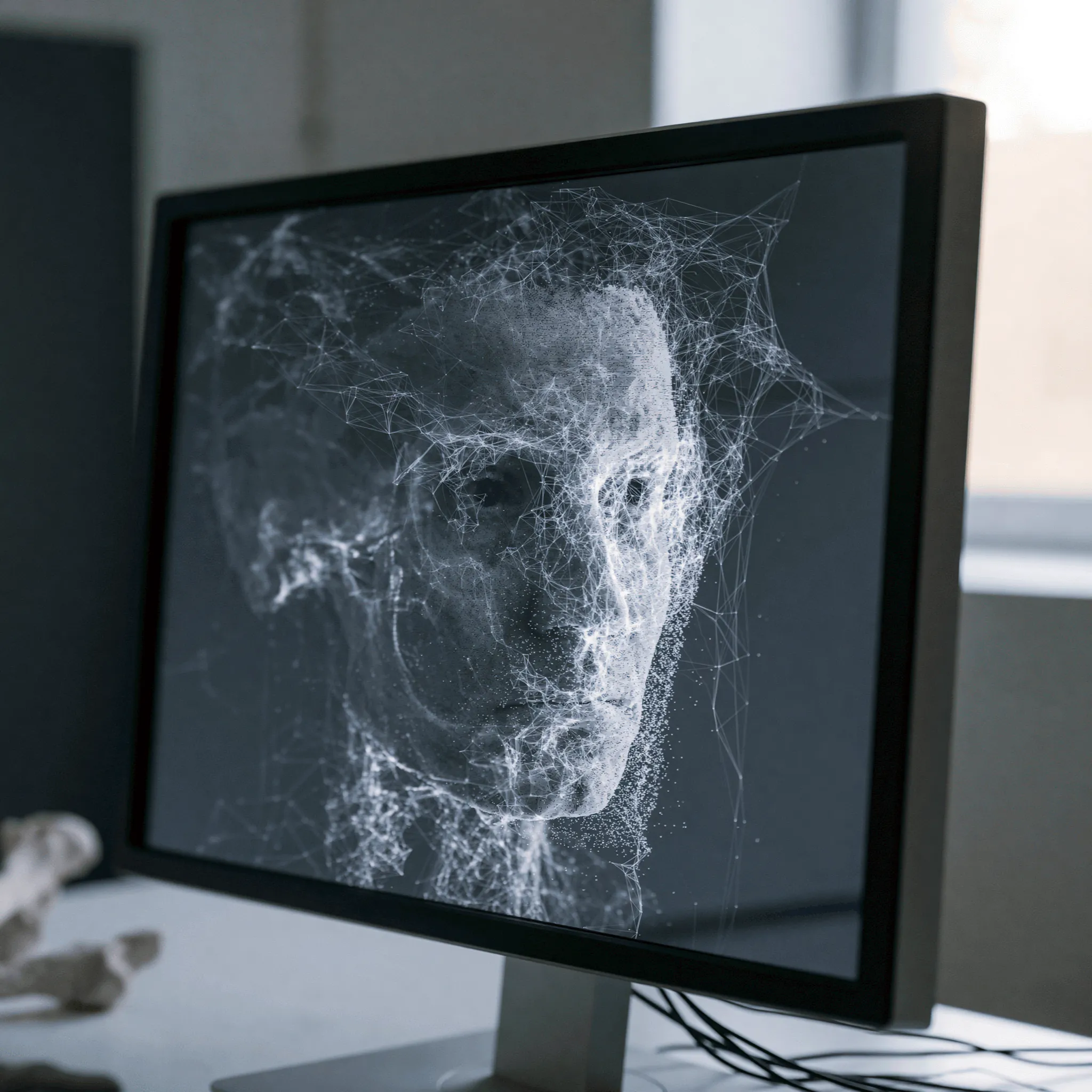
Today we have simulation software that, from a facial scan, builds an approximate three-dimensional model of the face. On that model we can represent, indicatively, the modifications proposed during facial feminisation surgery, mainly on the bone, and how those bone changes carry through to the expression of the soft tissue covering it. They depend enormously on the surgeon's experience, on knowing the limits of the changes produced when the structure beneath the skin is modified.
That has concrete practical value:
- It helps you understand volume, not just contour, something 2D cannot represent.
- It makes it possible to identify which areas concentrate the most change and which the least, useful for prioritising within the plan.
- It gives the patient somewhat more real elements to decide whether a specific procedure is worth it or not, before committing to it.
One more tool, not the explanation
3D doesn't replace the technical explanation. It complements the conversation about what will be done to the bone and why that translates into a particular change in the skin and soft tissue. The simulation helps you visualise; the surgeon's explanation is what provides the clinical context of why that change is the right one, and what its success depends on.
The limits you should know about
This is where honesty matters, because it's the part that usually goes untold. Most of the scans used in this software are static: they capture a position, not a movement. Only the most expensive and sophisticated scanning techniques currently allow a dynamic three-dimensional simulation faithful to surgical reality, and those techniques are still out of reach for most clinics.
That means what's normally used is an approximation: useful, better than 2D, but not an exact replica of how the face will look after surgery. Until these tools become widely accessible, or artificial intelligence can reproduce the tissue's real response to surgery more accurately, we work with this approximation, knowing that it is one.
Why this matters
A simulation presented as a promise creates an expectation the surgery then has to live up to, and that's a trap, for the patient and for the surgeon alike. A simulation presented as what it is, an indicative approximation, does exactly the opposite: it helps you decide with more information and arrive at theatre with an expectation adjusted to what the surgery, with its anatomical limits and each person's individual tissue response, can really deliver.
That's the difference between using a tool to sell and using it to inform. At ARQÉA we choose the latter.
→ Book your free consultation now