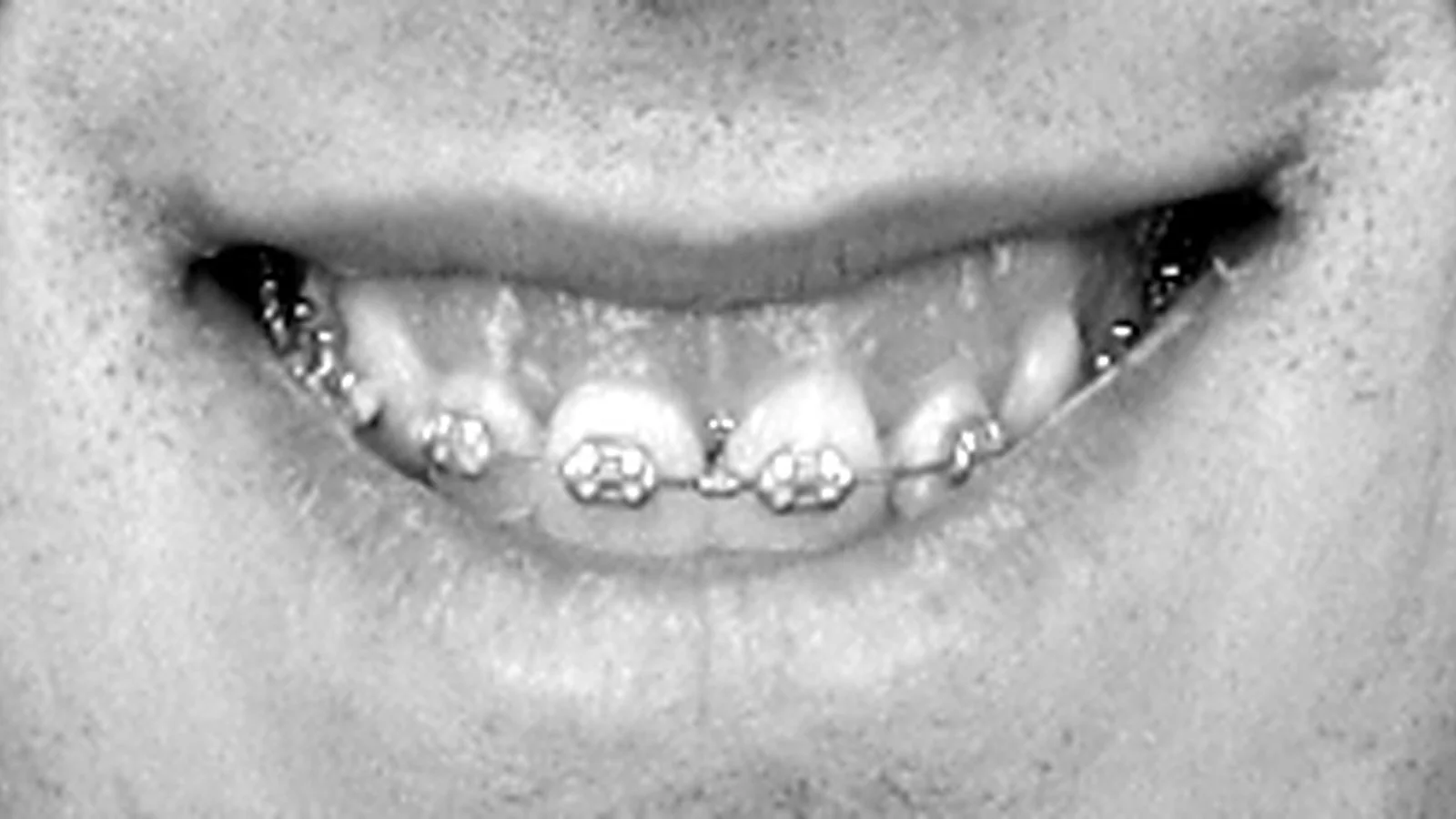
In short: masculinizing the chin does not always mean getting an implant. A custom implant adds shape, width and definition when the height and position of the chin are right. Genioplasty, which moves your own bone, is the option when the chin needs more height, a large advancement or an asymmetry corrected. What decides the technique is what your chin is missing.
When someone comes to us to masculinize their chin, the question usually arrives already formed: "Should I get an implant?".
It is a logical question. A few weeks ago we wrote here about custom implants and why, when they are planned properly, they work very well. But an implant is a tool, not the default answer. And in the chin, more than in any other area, choosing between implant and bone is a decision worth understanding before you make it.
First: what is your chin missing?
Before talking about techniques, we need to talk about dimensions. A chin can "not fit" for very different reasons:
- Projection: it sits too far back in profile.
- Width: it is narrow or pointed from the front.
- Height: it is short vertically and the lower third looks compressed.
- Shape: it lacks squareness at the edges, that more defined transition towards the jaw.
- Symmetry: it is shifted to one side.
In masculinization, the usual goal is more width, more squareness and adequate projection. But it is almost never just one thing, and your particular combination is what decides the technique.
When we think of an implant
A custom implant is a good option when:
- The height of the chin is right and what is missing is volume, width or definition of the contour.
- The change you need is moderate.
- The main aim is to work on shape: squaring the edges or creating a more marked transition towards the jaw angle.
Because it is designed from your CT scan, we can control precisely where we add volume and where we do not, something an off-the-shelf implant does not allow. And it has an advantage worth remembering: it is reversible. If it ever needed to be modified or removed, it can be.
When we think of bone (genioplasty)
Genioplasty consists of cutting the chin bone and moving it to the planned position, where it is fixed. It has an advantage the implant does not: it moves the chin in all three dimensions.
It is the option we usually suggest when:
- The chin needs more height. An implant adds volume, but it does not lengthen a short chin in a natural way.
- The advancement needed is large, and achieving it only with added volume would force the tissues.
- There is asymmetry: repositioning the bone lets us centre the chin, something an implant can only disguise.
- We need to widen from the bone itself, separating and repositioning its parts.
There is also an effect many people do not know about: when we advance the chin bone, the muscles attached to its inner side move forward with it. This can improve definition under the chin, something an implant, sitting outside the bone, cannot achieve.
If you want to see how we compare the two routes in general, beyond masculinization, we explain it in genioplasty or chin implant.
Before touching the chin, look at your bite
There is a mistake we see fairly often: treating as a chin problem what is really a problem with the position of the jaws.
If your chin looks set back because your whole lower jaw is, and your bite does not fit well either, operating only on the chin can camouflage the profile without solving the cause. In those cases, the first step is to assess whether orthognathic surgery makes sense, on its own or combined with masculinization in the same operation.
It is not always indicated, far from it. But it has to be ruled out before deciding.
It is not about "more", but about what fits you
A masculine chin is not the biggest chin possible. An oversized chin, or one with a shape that does not belong to your face, is as noticeable as one that falls short, and for the same reason: it does not fit.
That is why we do not start from a template. We start from your phenotype, the proportions of the rest of your face and what you are looking for. For trans men and cis men the reasoning is the same: the goal is a lower third that is consistent with your face, not a "standard" chin.
How we plan it
The decision between implant, bone or a combination is made with data:
- A CT scan to understand your bone, its thickness and the position of the nerves in the area.
- Medical photographs and a facial surface scan to assess the soft tissue.
- Prior virtual planning, where we simulate the bone movements or design the implant on your real anatomy.
- In bone surgery, custom cutting guides that carry what was planned into the operating theatre.
That planning is also the best tool for talking with you about expectations: what changes, by how much, and what will not change.
In summary
Implant and bone do not compete: they solve different problems. The implant is excellent for shape, width and definition when the position of the chin is right. Bone is the tool when the chin has to move for real: gaining height, advancing a lot or correcting an asymmetry.
So the question is not "implant or bone?", but "what is my chin missing?". Once that is clear, the technique almost chooses itself.
Frequently asked questions
Implant or bone: how is the chin masculinized?
It depends on what your chin is missing. A custom implant is excellent for shape, width and definition when the height and position of the chin are right. Genioplasty is the tool when the chin has to move for real: gaining height, advancing a lot or correcting an asymmetry.
Can a chin implant lengthen a short chin?
Not in a natural way. An implant adds volume, but it does not lengthen a short chin. When the chin needs more height, the option we usually suggest is genioplasty, which moves the chin in all three dimensions.
Can a chin implant be removed?
Yes. It is reversible: if it ever needed to be modified or removed, it can be.
How much does chin masculinization cost at ARQÉA?
A custom chin implant costs €4,000 and genioplasty with your own bone costs €6,000, with general anaesthesia and the surgical centre included. The final price is given at your consultation, once we know which technique fits your case.
How much time off work will I need?
About 2 weeks, with either an implant or chin bone surgery. You can lead a normal life (walking, talking, eating) from the first day; intense exercise should wait at least 4 weeks.
As we always say, this article is for general information and doesn't replace an individual medical assessment. If you want to know which option fits your case, book a consultation with our team.
→ Book your free consultation now