When someone tells us "I want a facelift", the first thing we think is: which one? Because that word covers techniques that are very different from one another, with results, risks and recovery times that have nothing to do with each other. This post tries to explain, without unnecessary jargon, why the deep plane occupies a particular place within that family.
One name, very different techniques
The term "facelift" groups together everything from procedures that work on the skin alone to techniques that act several planes beneath it. The deep plane isn't a single closed technique: it's a concept with different variants, developed and described by different surgeons over recent decades, each with its own nuances in approach or extent of dissection.
What they all share is the underlying principle: working beneath the SMAS (the superficial musculoaponeurotic system) and the platysma in the neck, releasing the anchoring structures that hold the tissues to deeper planes, often called facial "ligaments" (although in strict anatomical terms not all of them are ligaments in the literal sense). By releasing these fixation points, the tissue can be repositioned as a unit, in the direction and along the vector that suits each face, rather than merely being stretched at the skin.
That difference, working the muscle-and-skin unit in depth versus simply tightening the skin, is what explains why, well indicated and well executed, the result tends to read as rested, not as an "operated face".
The role of your own fat: volume, light and shadow
Ageing isn't just "skin sagging". It's also loss of volume in specific areas of the face (cheekbones, temples, tear trough) that completely changes how light falls on the face. Where there was once a convex surface reflecting light, a concave area appears that casts shadow. That shadow is often what we read as "tiredness" or "ageing", more than the sagging itself.
That's why the deep plane isn't limited to repositioning tissue: it's usually complemented with a transfer of the patient's own fat to those areas of volume loss. The aim isn't to fill for the sake of filling, but to return the points of light and shadow to where they used to be, with restraint. A poorly judged volume is as visible as a badly hidden scar.
Why it demands more: the facial nerve
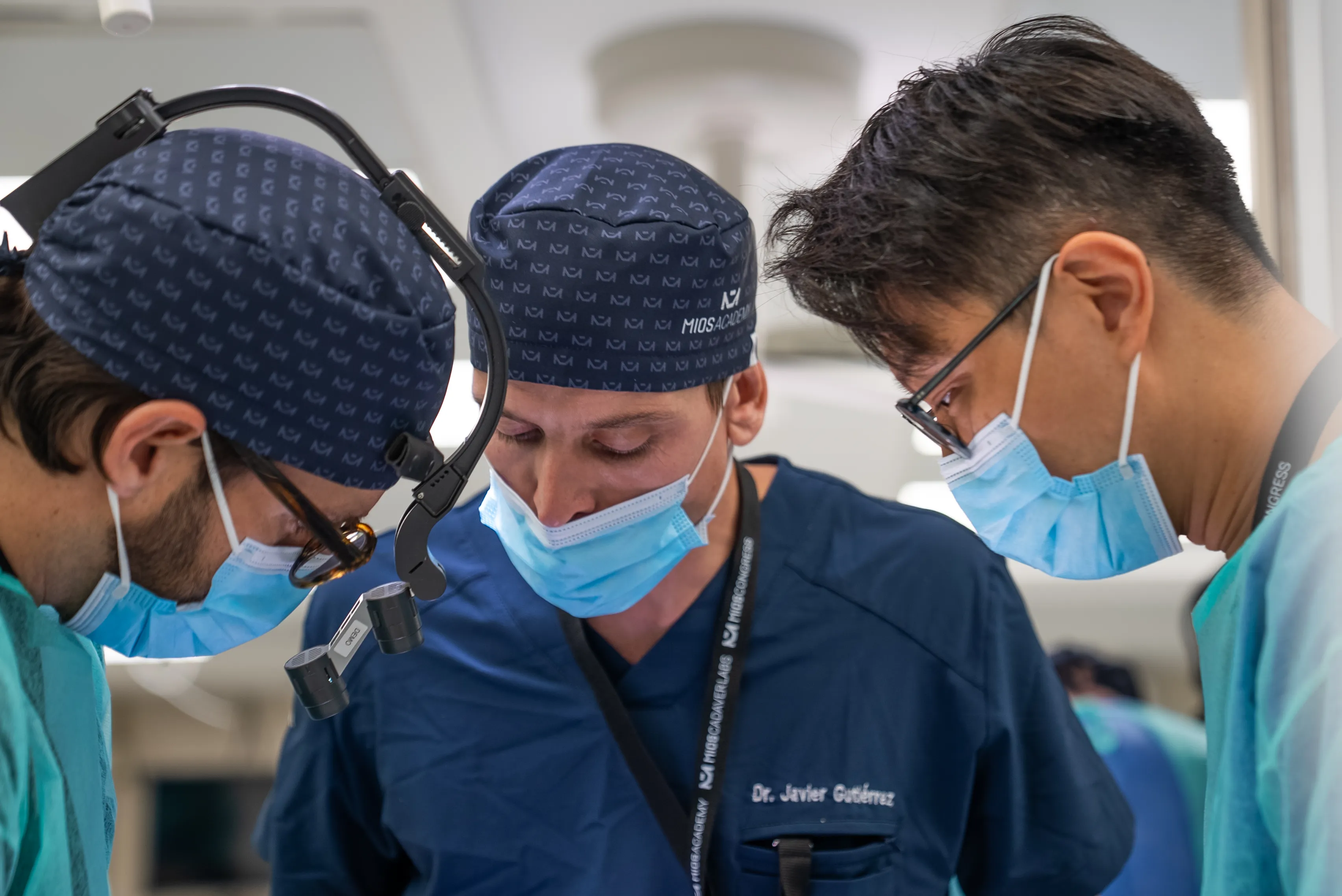
The deep plane is a more demanding technique than a superficial facelift, and there's a specific anatomical reason: the dissection runs close to the plane along which the branches of the facial nerve travel, the nerve responsible for facial expression. Working in this plane requires precise anatomical knowledge and experience, because the margin for error is smaller than in more superficial techniques.
This isn't a minor detail or something to be hidden: it is, precisely, the reason the technique should be explained honestly before deciding. A more laborious, more technically demanding procedure isn't synonymous with "more dangerous" in trained hands, but it does involve a learning curve and a responsibility the patient should know about.
Age isn't the criterion; laxity is
An idea we repeat often in consultation: a facelift isn't indicated by age, it's indicated by the degree of laxity and descent of the tissues. There's no minimum or maximum age fixed in advance. What there is, is an individual assessment: every face ages differently, at its own pace, and the decision to operate (and when to do it) depends on that examination, not on a number on your ID.
The neck isn't just "tightening"
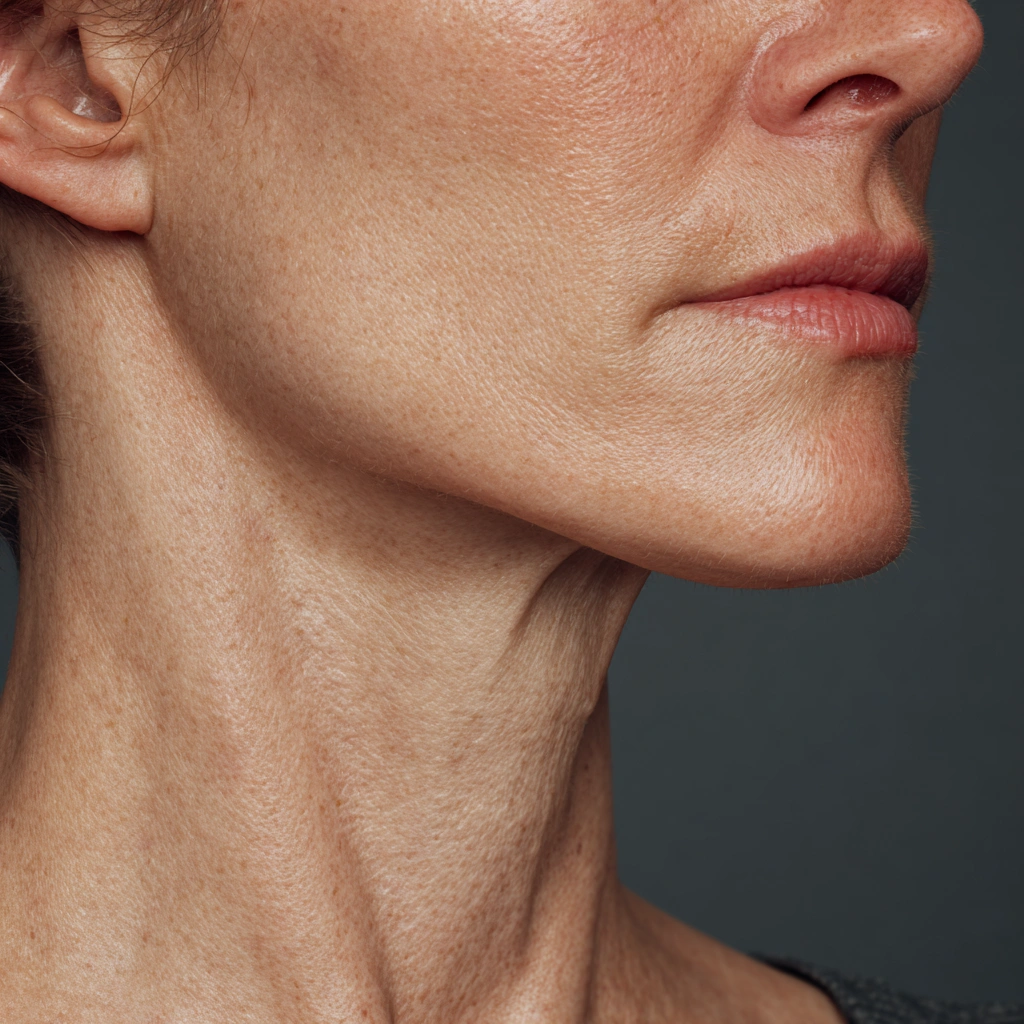
The neck deserves its own section because it's often the great misunderstanding. A well-conceived neck lift isn't only about tightening skin: depending on the type of neck, it can involve resuspending the platysma, treating excess or ptosis of the submandibular glands, or addressing the band of the digastric muscle, among other structures.
There's also an important nuance here that's rarely explained: the aim is not to eliminate the volume of these structures entirely. An over-emptied neck can look artificial and carry recognisable post-surgical stigmata. The goal is balance, not suppression.
Recovery: what the first month involves
As general clinical guidance (not a fixed figure, because every recovery is different), the time until you can fully resume your social life is usually around a month. That doesn't mean a month shut indoors: it does mean avoiding direct sun exposure, intense physical effort and risky activities while the swelling and tissue-settling phase completes. The improvement curve is progressive, and a good part of the final result reveals itself as the weeks pass.
A face is read as a whole
The deep plane doesn't always act alone. Facial ageing often affects areas that are easily forgotten: the forehead, whose descent can change the expression of the eyes even when the rest of the face has been treated, or the lower third, where a lip lift can rebalance a proportion no face and neck lift can correct on its own. Whether or not to combine these areas depends, again, on an individual assessment.
If you're considering this surgery, the most important thing isn't the name of the technique or who described it first: it's that the team operating on you understands your particular anatomy and explains, clearly, which plane will be worked on and why. If you want to resolve specific questions about your case, write to us and we'll discuss it at a consultation.
→ Book your free consultation now