.webp)
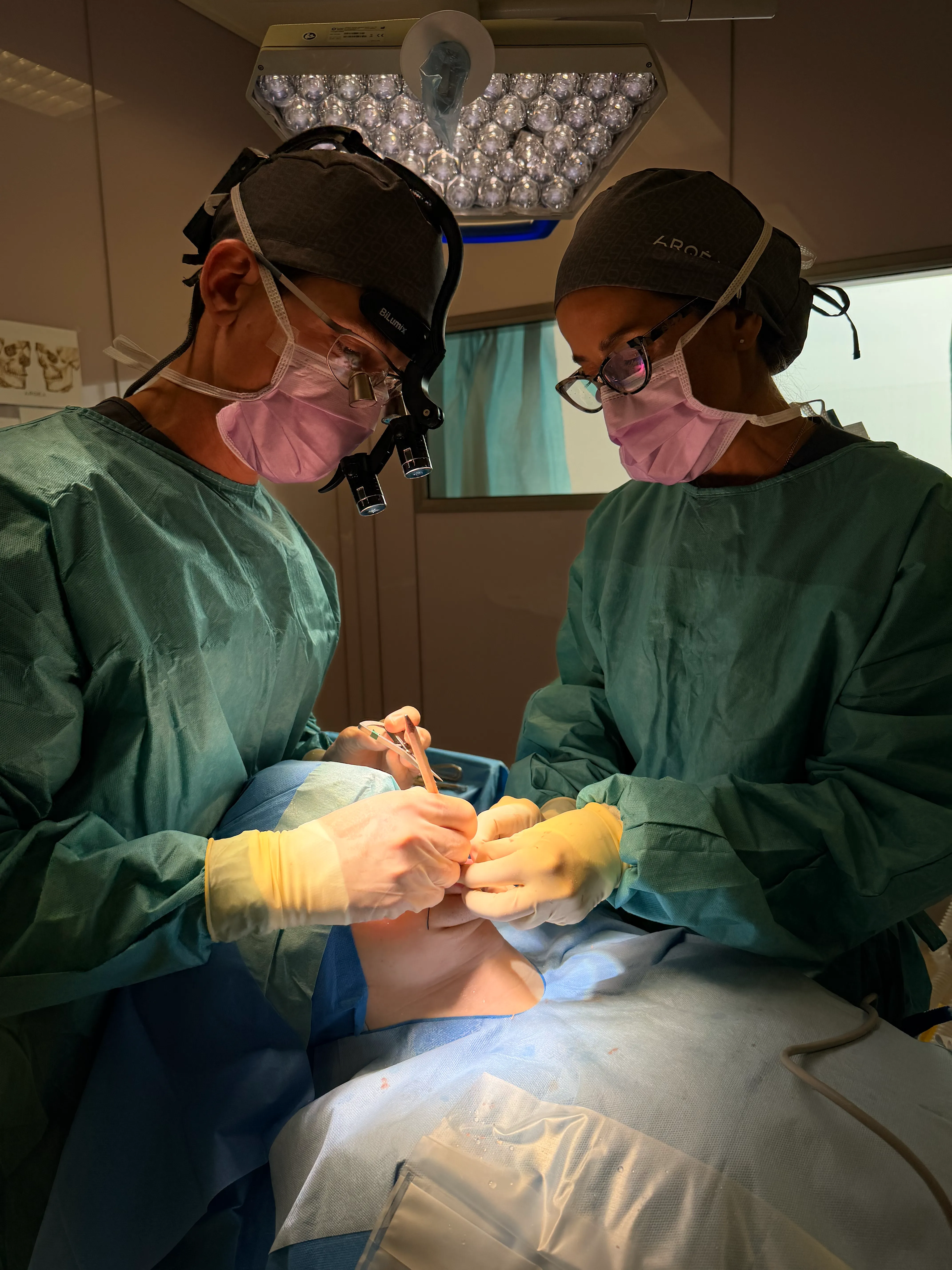
To choose an FFS surgeon, check facts that can be verified. Confirm the surgeon's specialty and registration on a public medical register. Ask how many FFS cases they have performed, where they operate, how they plan the surgery and what follow-up they provide. Ask for a written quote. Then compare at least two opinions.
Is there a "best" FFS surgeon?
No single surgeon is the best choice for every patient. Faces and goals differ. Surgeons differ in training and in the procedures they perform.
Lists of "best FFS surgeons" are usually published by clinics or directories. Few explain how the names were selected. A set of checks serves a patient better than a ranking. This guide lists twelve. Each one comes with a way to verify it without relying on the clinic's word.
The choice matters because the evidence onFFS comes from specialised teams. In a prospective multi centre study of 66 patients, the median facial feminisation outcome score rose from 47.2 before surgery to 80.6 at six months or later [1]. A second study found that FFS was independently associated with better psychosocial scores [2]. An earlier survey reported lower mental health related quality of life in trans women who had not had surgery than in those who had [8].
Not everyone needs or wants surgery. The WPATH Standards of Care, Version 8, include facial surgery among the options of gender-affirming care, decided case by case [3].
What does FFS involve?
FFS is a group of procedures, not one operation. A plan may include one procedure or several. It depends on the patient's anatomy and on what the patient wants to change.
The full list of procedures performed at ARQÉA is on the procedures page.
What are the twelve things to check about an FFS surgeon?
Each check below can be verified with a public source or a direct question. A surgeon who performs FFS regularly can answer all twelve in one consultation.
1. Specialty and training
FFS includes bone surgery of the forehead, jaw and chin. Ask which specialist title the surgeon holds and where they trained.
- How to check it: ask for the title and the body that issued it. Confirm it with that body.
2. Registration
A surgeon must hold a current licence in the country where they operate.
- How to check it: ask for the registration number and search the public register. In Spain, each provincial medical college lists its members, and the national medical council offers a public search. In the UK, the General Medical Council keeps the register.
3. Dedication to FFS
Ask what share of the surgeon's practice is FFS and in which year they began.
- How to check it: compare the answer with the dates of their publications and conference lectures on FFS.
4. Case numbers by procedure
A total figure says little. Ask how many times the surgeon has performed each procedure in the plan.
- How to check it: ask the question in writing and keep the answer.
Surgeon's note. Forehead reconstruction and jaw contouring are different operations with different learning curves. I advise patients to ask for numbers by procedure, not for one total.
5. Publications
Peer-reviewed articles show that other surgeons have examined a surgeon's methods and results.
- How to check it: search the surgeon's name on PubMed. Read the titles and the journals.
6. Where the surgery takes place
Ask the name of the hospital or surgical centre. Ask whether it provides overnight care and what happens in an emergency.
- How to check it: health authorities license surgical centres. In Spain, authorised centres appear in a public national register.
7. Anaesthesia team
Ask who gives the anaesthetic. Ask whether that person is a specialist anaesthetist and stays for the whole operation.
- How to check it: ask for the anaesthetist's name and registration number before surgery.
8. Planning
Bone surgery is planned on imaging. Ask whether the surgeon plans on a CT scan and with virtual 3D planning. Ask to see the plan before the operation [4].
- How to check it: ask to see a planning example at the consultation.
9. Documented results
Ask to see cases with anatomy similar to yours. Ask how long after surgery each photograph was taken. A clinic needs the patient's consent to show any image.
- How to check it: ask for results at 12 months, not only at a few weeks.
10. Follow-up after the return home
Ask who answers questions after discharge, by which channel and for how long.
- How to check it: ask for the follow-up schedule in writing, including remote review.
11. Revision policy
Ask what happens if a revision is needed, who decides it and who pays for it.
- How to check it: the policy should appear in the written quote or in the consent documents.
12. A written, itemised quote
Ask for a closed quote before paying a deposit. The section on quotes below lists what it should include.
- How to check it: compare the quote line by line with the list in this guide.
Why should the whole face be planned, not single features?
Facial features are read together. A change to one feature alters how the others are perceived. A plan that treats each feature in isolation can leave the face out of proportion.
Not every feature needs surgery. Some traits weigh more than others in how a face is read, and some change with hormone therapy. A surgeon should be able to say which procedures they would leave out of a plan, and why.
Feminisation and beautification are different aims. Feminisation changes traits that are read as masculine. Beautification pursues an aesthetic preference. A patient may want one or both. The plan should state which procedures serve which aim.
Secondary surgery after FFS has been studied, including the causes of poor outcomes and how to avoid them [7]. Ask a surgeon how they prevent overcorrection and what they do when a patient asks for more change than they would advise.
Surgeon's note. After more than 1,000 FFS cases, I still begin each consultation with the whole face and not with a list of procedures. In some consultations I advise against a procedure the patient came to ask for.
One surgeon or a specialist for each procedure?
Both models exist. In one, a single surgeon performs every procedure. In the other, each procedure goes to a surgeon who specialises in it. The questions are the same in both cases:
- Who performs each procedure in the plan?
- Do all the surgeons operate in the same session?
- Who coordinates the plan, and who is the contact after surgery?
- How many times a year does each surgeon perform their procedure?
What changes when the surgery is abroad?
Travel adds planning. It does not change the twelve checks. Ask these questions before booking a flight:
- What is the minimum stay before the journey home?
- Who removes sutures and reviews the wounds?
- How do remote reviews work, and in which language?
- What does the clinic do if a complication appears after the return home, and who covers the cost?
- Will the clinic provide a written report for the patient's own doctor?
Standard travel insurance often excludes planned surgery. Read the policy before travelling.
Surgeon's note. Most of the recovery takes place at home. I ask patients to plan those weeks before they plan the trip.
What should an FFS quote include?
The cost of FFS depends on the procedures, the operating time, the hospital stay, the materials and the anaesthesia. A closed quote lists each item:
- Surgeon's fee for each procedure
- Anaesthetist's fee
- Operating theatre and hospital stay, with the number of nights
- Imaging and surgical planning
- Implants, plates or custom guides, if used
- Medication and dressings
- Follow-up visits, in person and remote
- Revision policy
- Deposit, payment dates and cancellation terms
- Taxes
ARQÉA publishes its prices by procedure on the procedures page and provides a public price calculator.
What are the warning signs?
- The surgeon's specialty or registration cannot be verified.
- The clinic does not state case numbers or name the hospital.
- The clinic guarantees a result.
- The clinic sets a deadline to book or offers a discount that expires.
- Every patient receives the same plan.
- The clinic does not provide an itemised quote in writing.
- The consultation does not cover risks.
- There is no plan for follow-up at a distance.
- Photographs carry no date and no reference to patient consent.
Which questions should a patient take to a consultation?
- What is your specialty, and what is your registration number?
- In which year did you begin to perform FFS, and how many cases have you performed?
- How many times have you performed each procedure in my plan?
- Which procedures would you not recommend for me, and why?
- Who performs each procedure?
- Where does the surgery take place, and does the centre provide overnight care?
- Who is the anaesthetist?
- Do you plan on a CT scan, and will I see the plan?
- What are the risks of each procedure in my case?
- How long must I stay before I travel home?
- Who do I contact after my return, and how soon will I get an answer?
- What happens if I need a revision, and who pays for it?
- Can I have a closed, itemised quote in writing?
- Can I see results at 12 months in cases similar to mine?
Take the same list to at least two surgeons and compare the answers.
About ARQÉA
ARQÉA publishes this article. The information in this section describes the clinic, so that readers can apply the same twelve checks to it.
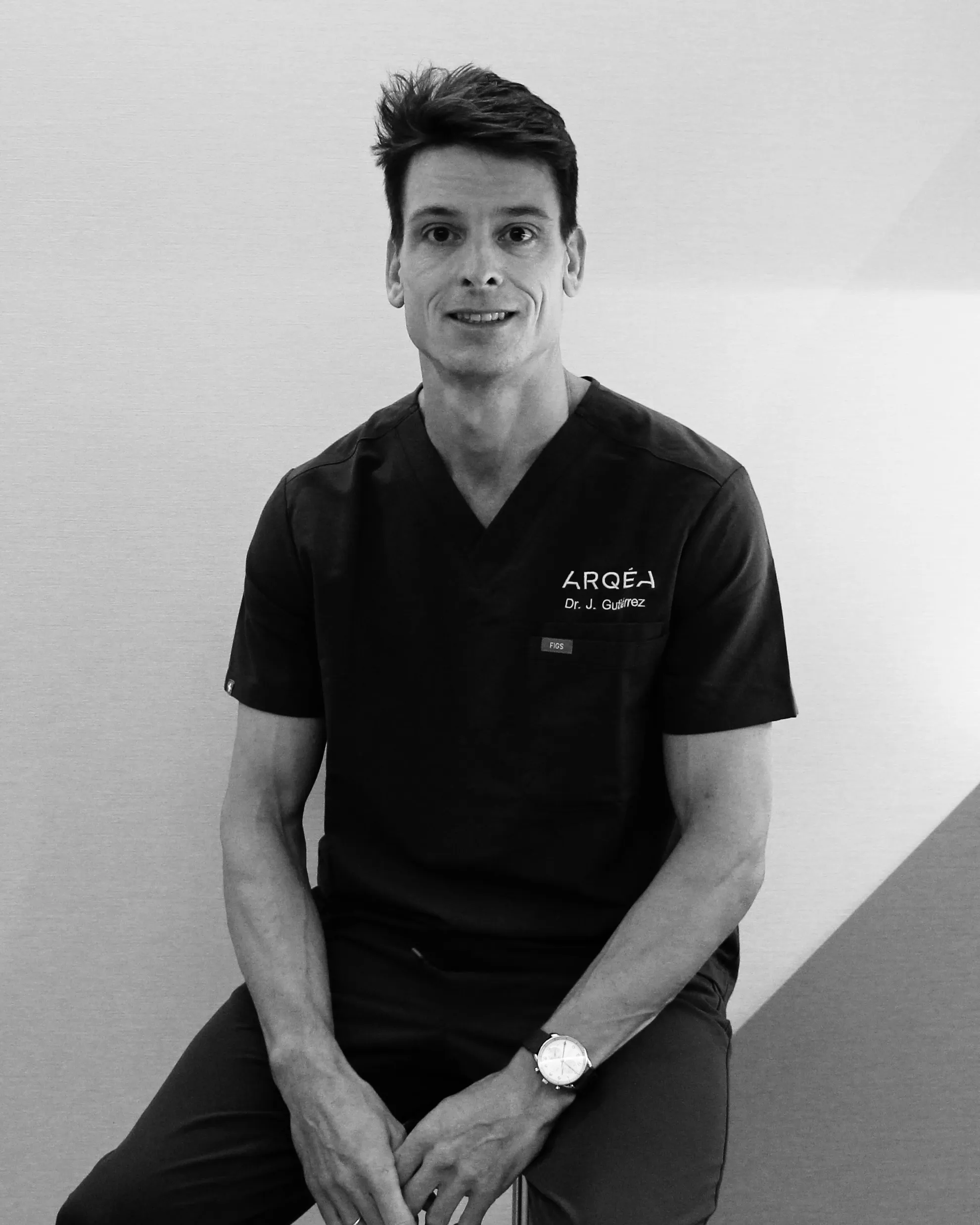
ARQÉA is a facial surgery practice in Barcelona, founded and directed by Dr Javier Gutiérrez Santamaría. Dr Gutiérrez is a specialist in Oral and Maxillofacial Surgery. He trained at Hospital Universitario Vall d'Hebron, Barcelona, from 2008 to 2013 and was a staff surgeon there until 2017. He holds a PhD in Medicine from the Universitat Autònoma de Barcelona (2020) and is a Fellow of the European Board of Oral andMaxillofacial Surgeons (2018).
He is registered with the Col·legi Oficial de Metges de Barcelona (COMB), number 08-43588. He has performed FFS since 2015 and has completed more than 1,000 cases. He is co-author of eight peer-reviewed articles on facial gender-affirming surgery, four of them as first author. He is a member of SECOM, SECPF, EACMFS, IAOMS and WPATH, and regional faculty of AO CMF and SORG for FFS and orthognathic surgery.
More information: the team, the clinic, prices by procedure.
Consultations take place in person or online and can be booked here.
Frequently asked questions
Who is the best FFS surgeon in Europe?
No single surgeon is the best choice for every patient. The suitable surgeon depends on the procedures in the plan, on the surgeon's training and case numbers in those procedures, and on the follow-up they provide. A patient can verify each of these points on public registers and in a consultation. Two or more opinions allow a comparison.
Should an FFS surgeon be a maxillofacial surgeon or aplastic surgeon?
Both specialties perform FFS. Forehead, jaw and chin procedures are bone surgery, which is core training in oral and maxillofacial surgery and in craniofacial surgery. Several specialties perform the soft tissue procedures. The title matters less than the surgeon's training and case numbers in each procedure of the plan.
How many FFS cases should a surgeon have performed?
No official minimum exists. Ask for the year the surgeon began to perform FFS and for case numbers by procedure. A surgeon may have long experience in rhinoplasty and little in forehead reconstruction. Compare the figures with the surgeon's publications and lectures on FFS.
Is it safe to travel abroad for FFS?
The country matters less than the surgeon, the hospital and the follow-up. Every operation carries risks, at home or abroad. Before travelling, confirm the surgeon's registration, the name of the hospital, the minimum stay, the plan for remote reviews and what the clinic does if a complication appears after the return home.
What should I ask at an FFS consultation?
Ask about the surgeon's specialty and registration, case numbers by procedure, who performs each procedure, where the surgery takes place, how it is planned, the risks in your case, the minimum stay, the follow-up after your return, the revision policy and a closed quote in writing. This guide lists fourteen questions to take with you.
Do I need every FFS procedure?
No. FFS is a group of procedures, and a plan includes only those that address what the patient wants to change. Some features weigh more than others in how a face is read. A surgeon should explain which procedures they would leave out, and why. Some people decide not to have surgery.
How long should I stay after FFS before flying home?
It depends on the procedures and on the recovery. The surgeon sets the minimum stay for each plan. Ask for that figure in writing before booking travel, and ask which reviews take place before departure. A flexible return ticket allows for changes.
What should an FFS quote include?
A closed quote lists the surgeon's fee foreach procedure, the anaesthetist's fee, the operating theatre, the hospital stay, imaging and planning, materials, medication, follow-up visits, the revision policy, payment terms and taxes. Ask for it in writing before paying a deposit.
More answers are on the FAQ page.
References
1. Morrison SD, et al. Prospective Quality-of-Life Outcomes after Facial Feminization Surgery: An International Multicenter Study. Plast Reconstr Surg.2020;145(6):1499-1509. https://pubmed.ncbi.nlm.nih.gov/32459779/
2. Caprini RM, et al. Effect of Gender-affirming Facial Feminization Surgery on Psychosocial Outcomes. Ann Surg. 2023;277(5):e1184-e1190. https://pubmed.ncbi.nlm.nih.gov/35786682/
3. Coleman E, et al. Standards ofCare for the Health of Transgender and Gender Diverse People, Version 8. Int J Transgend Health. 2022;23(Suppl1):S1-S259. https://pubmed.ncbi.nlm.nih.gov/36238954/
4. Capitán L, Gutiérrez-Santamaría J, et al. Facial Gender Confirmation Surgery: A Protocol for Diagnosis, Surgical Planning, and Postoperative Management. Plast Reconstr Surg. 2020;145(4):818e-828e. https://pubmed.ncbi.nlm.nih.gov/32221232/
5. Capitán L, et al. The Upper Third in Facial Gender Confirmation Surgery: Forehead and Hairline. J Craniofac Surg. 2019;30(5):1393-1398. https://pubmed.ncbi.nlm.nih.gov/31299729/
6. Simon D, et al. Facial Gender Confirmation Surgery: The Lower Jaw. Description of Surgical Techniques and Presentation of Results. Plast ReconstrSurg. 2022;149(4):755e-766e. https://pubmed.ncbi.nlm.nih.gov/35188904/
7. Simon D, et al. Secondary Facial Gender Surgery: Causes of Poor Outcomes and Strategies for Avoidance and Correction. Plast Reconstr Surg.2023;152(2):347e-357e. https://pubmed.ncbi.nlm.nih.gov/36827474/
8. Ainsworth TA, Spiegel JH. Quality of life of individuals with and without facial feminization surgery or gender reassignment surgery. Qual LifeRes. 2010;19(7):1019-1024. https://pubmed.ncbi.nlm.nih.gov/20461468/
As we always say, this article is for general information and doesn't replace an individual medical assessment. If you want to know whether your case fits this profile, book a consultation with our team.
→ Book your free consultation now