In facial feminisation surgery, the forehead is usually the area that carries the most weight in the overall result. It's also the one that varies most from patient to patient: not only in starting anatomy, but in what each patient wants to achieve.
That's why at ARQÉA we don't start from a single technique applied identically to every patient. We start from two questions: what is this specific anatomy like and what is this specific patient's goal. The technique adapts to those two answers, not the other way round.
Which decisions come into play
When we plan forehead surgery, several variables will shape the result, regardless of which surgical technique we end up using:
- The size of the forehead. We can lengthen it or shorten it, depending on the starting point and the effect we want on the proportions of the upper third.
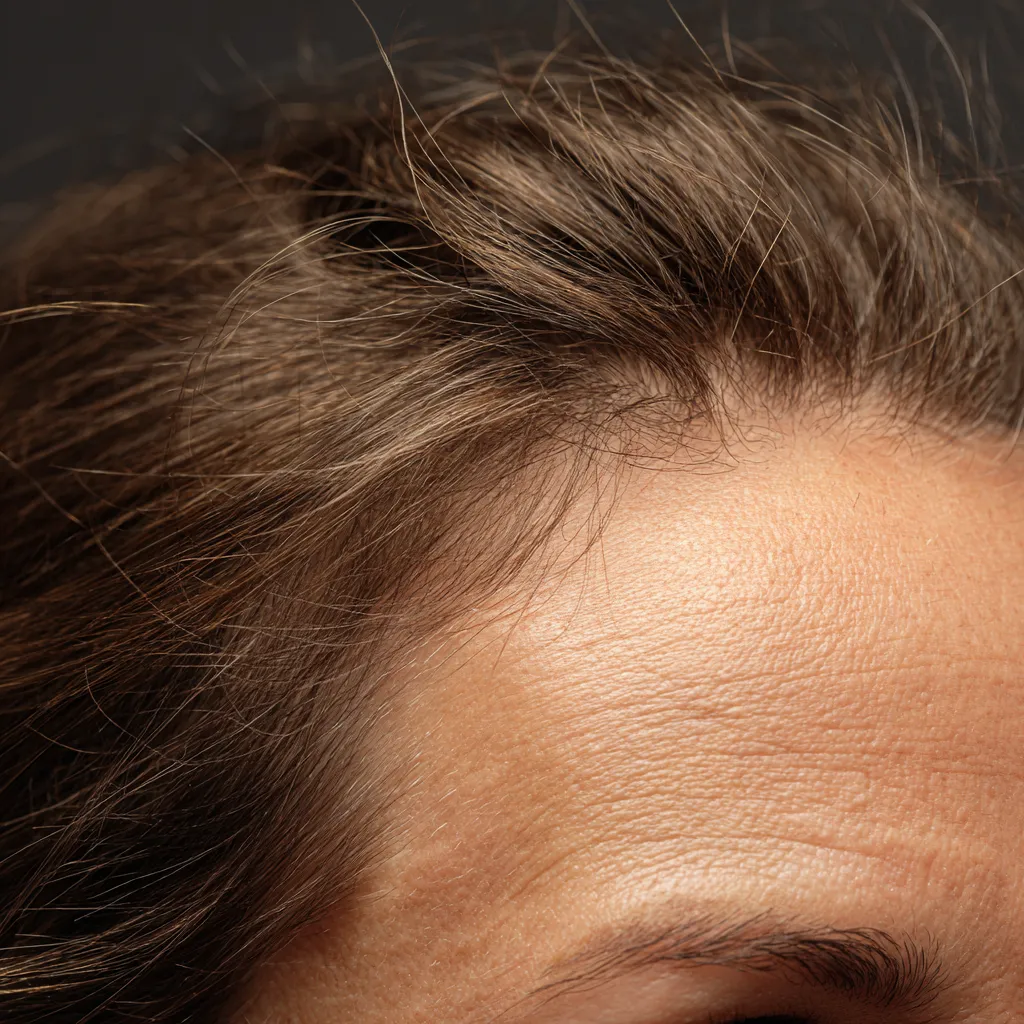
- The shape of the forehead. More pronounced, more rounded, flatter, further forward or further back. Several areas come into play here (the frontal bossing, the supraorbital bossing, the nasal root and paranasal region, the orbital rim, the second bossing) and several possible techniques (burring, cutting and repositioning, or the use of implants), depending on what each area requires.
- The impact on the eyes. How much weight we take off the eye area, how much the gaze opens up, how much upper eyelid becomes visible. This isn't a free choice: it depends on the available anatomy, and it's a point we work through calmly at the consultation so the patient understands the real margin for change.
- The position of the brows. Higher or in the same position, and whether that change affects the medial and lateral portions equally, or differently.
Why this is decided at the consultation, not in theatre
All these decisions are defined with each patient during the visits before the operation, not on the day of surgery. It's at the consultation where we compare anatomy and goals, and where we design which technique (or combination of techniques) makes sense for that specific forehead.
This has an important consequence: anatomy sets the limit, not desire. Sometimes the starting anatomy allows us to go very far towards the change you're looking for. Other times it allows less. When that happens, our job is to adjust expectations honestly, before operating, not after.
Individualising isn't a slogan. It's simply the only way for the planning to make clinical sense.
How we assess the changes before operating
Adjusting expectations isn't just a conversation. We have several ways of bringing each patient closer to a realistic result before entering the theatre.
With a good physical examination, we can simulate the brow position in front of a mirror, simply and honestly, without exaggerating the effect.
We can also mark how far the hairline can realistically be brought, whether through surgical advancement or a transplant, according to what your anatomy allows.
Added to that are 2D and 3D simulation tools, which help visualise the proposed change on the patient's own anatomy.
We also review your CT scan together with you, at the consultation, pointing out on the image itself the areas to be treated and the kind of change proposed for each one. This prior virtual planning lets us draw the desired changes onto your real anatomy before taking them into theatre.
And we have the reference of cases from other patients with similar anatomies, before and after, which help you understand what kind of change is reasonable to expect in each situation.
None of these tools replaces real anatomy or guarantees a result.
They are, simply, ways of bringing the conversation closer to what's possible.
Precisely because these tools exist, it makes sense to use them: if you're considering surgery, we invite you to book a personal consultation. None of this resolves well in writing or at a distance. It's in a relaxed conversation, face to face with the doctor, where we can truly understand what each patient is looking for and what her own anatomy offers.
The better we prepare the surgery together, the easier it is for expectations and the final result to meet. We don't operate for a patient: we operate with her. That, for us, is the real doctor-patient team.
Want to know what your anatomy makes possible? We can look at it together at a consultation.
→ Book your free consultation now