Surgery day is the moment with the most questions and the fewest clear answers. Most clinics hand you an instruction sheet and a phone number. We prefer to tell you exactly what is going to happen, in what order, and what it's normal to feel. This article reflects our actual protocol.
It covers everything from the weeks beforehand to discharge. If your surgery requires a hospital stay, there's a specific section for that.
The weeks before: preparation that makes a difference
A significant part of the surgical result is decided before you ever enter the operating theatre. These are the instructions we ask you to follow weeks in advance, with the reason behind each one.
3 weeks before: what to stop
- Tobacco and nicotine in any format: cigarettes, patches, gum, vapes. Nicotine reduces the oxygen supply to your tissues, increases the risk of infection and impairs healing in a clinically significant way.
- Anticoagulants and antiplatelets: Sintrom, aspirin, warfarin, Plavix, heparin and similar. If you take them on prescription, do not stop them without checking with your doctor first. At ARQÉA we coordinate this with you well in advance.
- Supplements with an anticoagulant effect: vitamin E, omega-3, garlic, ginkgo biloba. As a general rule, stop any non-essential supplement three weeks before surgery and for one week after.
- Laser hair removal or electrolysis in the areas to be operated on: recently treated skin has an altered tissue response that interferes with healing.
2 weeks before
- Minoxidil, topical or oral: if you use it and your plan includes a hair transplant or surgery in the scalp area, stop it 14 days beforehand.
1–2 months before: a dental clean
If your surgery involves the jaw, chin or upper jaw, we recommend a professional dental clean beforehand. The bacterial load in the mouth is a genuine source of infection risk in maxillofacial surgery. This isn't box-ticking: it has a direct clinical impact.
If you have diabetes
Tell us before surgery if you haven't already. Perioperative glucose management requires a specific protocol that we coordinate with your doctor. It's not a barrier to surgery, but we do need to know.
General rule: if you take any regular medication and aren't sure whether to stop it, write to us before deciding on your own. We'd much rather answer a question remotely than manage an avoidable complication.
The preoperative consultation
Before surgery, the anaesthesia team studies your case in detail. They review the health questionnaire and blood tests you will have completed beforehand, and decide whether any further tests are needed or whether you're already in optimal condition for the operation. There is no one-size-fits-all protocol: the assessment is individual.
On the day of the preoperative consultation, don't wear make-up. Clinical photographs will be taken for the final assessment before surgery.
The night before
Fasting
Complete fasting, solids and liquids including water, from midnight the night before. A minimum of 8 hours. No exceptions.
If you take regular medication in the morning, check with us first: some medicines are taken with a small sip of water, others are skipped that day. Don't decide alone.
What not to do the day before and the day of surgery
- Don't use creams, make-up or sunscreen on the day of surgery
- Don't wear contact lenses: bring your glasses
- Don't drink alcohol or do intense exercise the day before
- Don't wear jewellery, piercings or valuables: remove them all before leaving home
- Don't wear hair extensions if your surgery involves the scalp or forehead area
- Don't wear nail polish: the pulse oximeters that monitor your oxygen levels during surgery need bare nails
What you should do
- Shower that morning: it's your last full shower for at least the next 48 hours
- Wear comfortable clothing that opens at the front or from above, not tight tops that pull over your head
- If your surgery is a day case, come with a companion. It's mandatory: you cannot drive or travel alone after general anaesthesia. If your surgery includes an overnight stay and you come without a companion, you must travel by individual transport (taxi or similar), never in your own car
- Bring your ID or passport
If you have any question the night before: message us on WhatsApp. We reply. Don't sit with an unresolved doubt.
Arriving at the centre
ARQÉA's surgeries take place at IM Clinic and Gournay, Barcelona.
Arrival time is always 60 minutes before the start of surgery. Your coordinator confirms your exact schedule in advance.
Reception and preparation
- Confirmation of your identity and procedure
- Change into a surgical gown: your clothes stay in your room
- IV line placed by the nursing team
- Pre-anaesthetic assessment by the anaesthetist
Dr Gutiérrez's visit before you go in
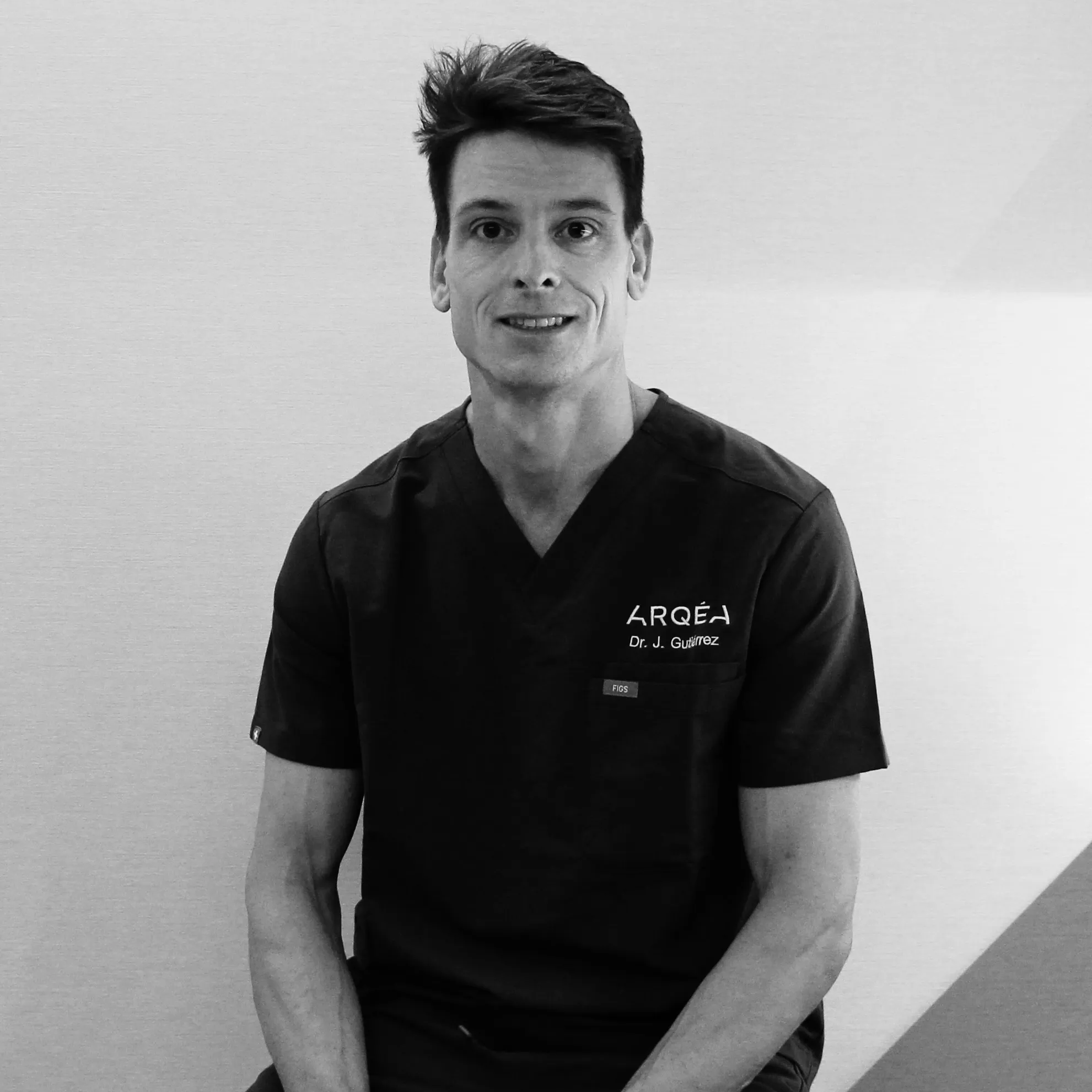
Before you enter the theatre, Dr Gutiérrez comes to see you. The surgical plan is confirmed, markings are made if your procedure requires them, and any last-minute questions are answered.
The day's timeline
An indicative schedule for forehead feminisation surgery. Timings vary by procedure; your coordinator confirms yours in advance.
- T-60 min — Arrival at the centre: reception, change of clothes, IV line, anaesthetic assessment
- T-15 min — Surgeon's visit: plan confirmation, surgical markings, final questions
- T-0 — Into theatre: positioning, monitoring, anaesthetic induction
- T+15 min — Surgery begins: Dr Gutiérrez starts the procedure once anaesthesia is confirmed
- T+90–180 min — Procedure: forehead ~120 min · jaw+chin ~180 min · lip lift ~60 min · tracheal shave ~60 min
- End of surgery — Closure and dressing: sutures, compression dressing where applicable, transfer to recovery
- +1–2 h — Recovery: waking from anaesthesia, monitoring, first vital signs
- +3–5 h — Discharge or admission: see the hospital stay section below
What happens inside the theatre
Before you fall asleep
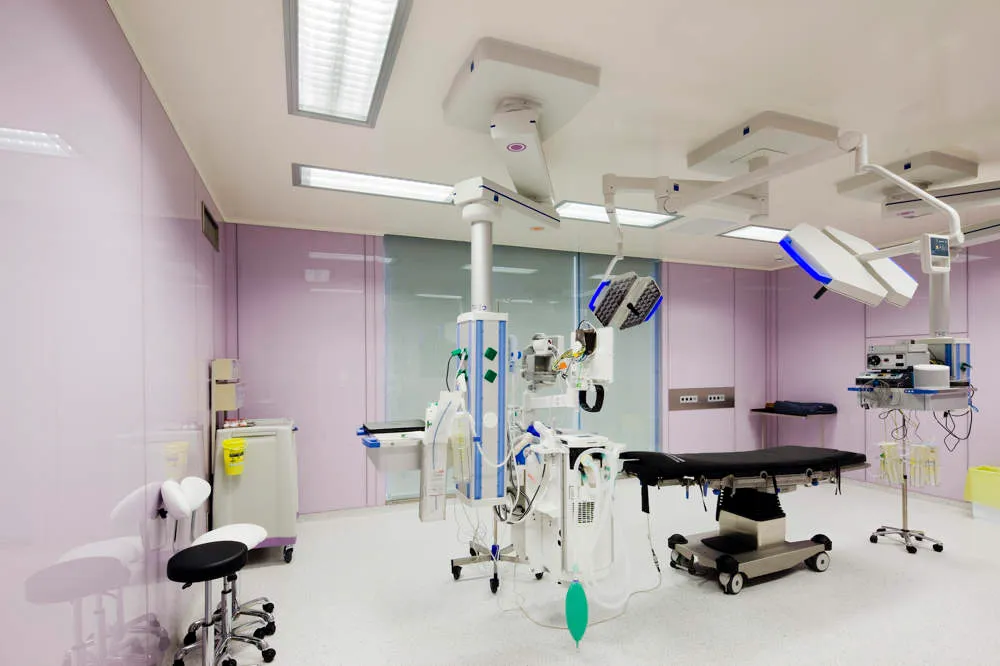
You enter the theatre walking or in a wheelchair depending on your premedication. The room is cold; that's deliberate, it reduces bleeding. You're settled on the surgical table, monitoring electrodes are placed, and the anaesthetist starts the induction through the IV line you already have. Falling asleep takes less than a minute. The last thing most people notice is a faint sensation of warmth up the arm.
While you're asleep
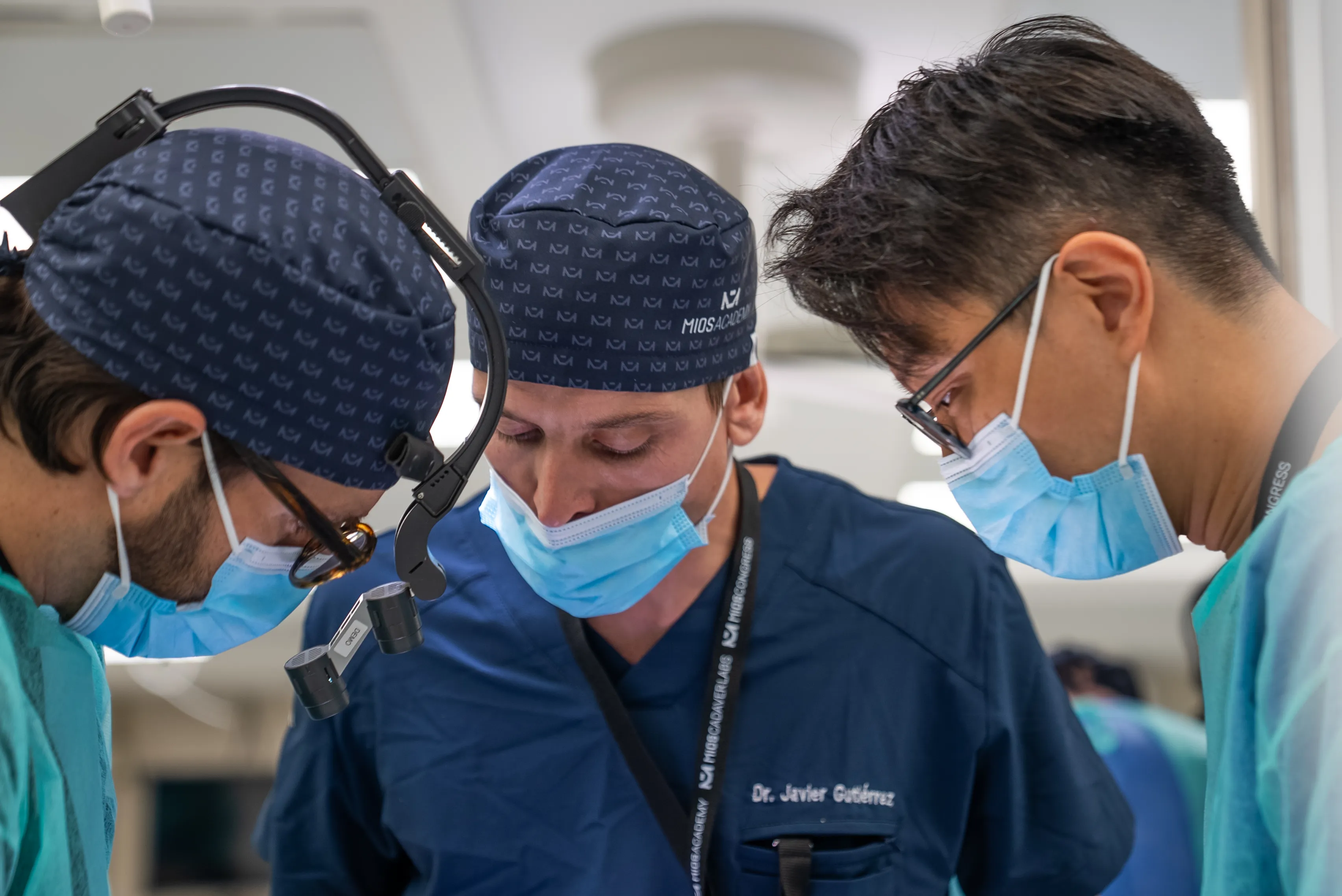
Dr Gutiérrez and the team work through the planned protocol. The anaesthetist maintains the anaesthetic level and monitors your vital signs continuously. If anything varies from the plan, the team manages it and explains it to you when you wake.
Waking up
Waking from general anaesthesia is gradual. The first minutes bring normal disorientation: you may feel cold, mildly nauseous or dry-mouthed. All of this is expected. The most common first question on waking is: is it done? Yes, it's done.
What nobody tells you: the result you see at first is far from the reality. Dressings distort which areas are swollen and which aren't. Swelling keeps increasing until past the first 72 hours, three full days, and then gradually subsides. How you look after your first night in hospital is usually better than the next day, when you get home. Don't be alarmed.
Immediate recovery: admission or discharge
Day-case surgeries (lip lift, tracheal shave, jaw alone, chin alone): you come in and leave the same day once you've cleared recovery. You need a companion for discharge; patients are not discharged alone.
Forehead feminisation: always includes at least one night in hospital, as the standard of care for surgery of that magnitude.
Packages of 3 or more procedures in the same session: the usual protocol is two nights in hospital.
Normal in the first 72 hours
- Progressive swelling that increases until day 2–3 and then begins to subside
- Bruising in the operated area and adjacent zones
- Discomfort opening your mouth, swallowing or moving your neck, depending on the procedure
- A feeling of tightness or pressure in the operated area
- General tiredness for 2–4 days
- A mild temperature of up to 38.5 °C in the first 24–48 hours
Signs that require immediate contact
If you notice any of these symptoms, message us immediately on WhatsApp or call the emergency number you receive at discharge. Don't wait for your check-up:
- Active bleeding that doesn't stop with gentle pressure
- Fever above 39 °C beyond the first 48 hours
- Pain that doesn't respond to the prescribed medication
- A feeling that something has given way or changed in the operated area
- Significant difficulty breathing or swallowing
Postoperative medication
We routinely prescribe antibiotic, anti-inflammatory and pain-relief medication for the first days, adapted to the procedures performed in each case. You receive the regimen in writing at discharge, with doses and timings specific to you.
Alongside the medication, you'll receive detailed guidance on diet, daily activity and care at home, including a care manual with instructional videos. Don't change doses or add medication without checking with us first.
Postoperative check-ups
Check-ups are included in the price of your surgery. The standard schedule is:
- 5–7 days: first check-up, removal of stitches or dressing review
- 3–4 weeks: second check-up, assessment of the scar and initial result
- 3 months: first real assessment of the result, once most of the swelling has settled
- 6–12 months: final result
Check-ups can be in person or by video call depending on where you live. Follow-up doesn't end until the result is consolidated.
Frequently asked questions about surgery day
How long does the surgery take?
It depends on the procedure. Lip lift: ~60 min. Tracheal shave: ~60 min. Jaw and chin: ~150–180 min. Full forehead: ~90–150 min. If several procedures are combined in one session, the times add up with transition margins.
Is Dr Gutiérrez there for the whole operation?
Yes. He is the lead surgeon and is present throughout the entire operation. At ARQÉA there are no trainees completing procedures.
What if a planned procedure is not performed during surgery?
Dr Gutiérrez explains it to you in detail when you wake. If a procedure is not carried out for any clinical reason, the price is adjusted accordingly. You are not charged for what isn't done.
When can I go back to work?
For office or remote work: between 5 and 10 days in most cases. For work with public contact or physical effort: between 2 and 4 weeks.
Can I smoke after surgery?
We ask you not to smoke for at least 3 weeks after the operation. Tobacco directly impairs healing and increases the risk of postoperative complications.
In summary
Preparation starts weeks in advance with specific clinical instructions. Surgery day follows a clear protocol: arrival 60 minutes early, preparation, the surgeon's visit, theatre and recovery. Standalone procedures are day cases; the forehead always includes one night in hospital; three-procedure packages, two nights. Check-ups are included in the price and follow-up lasts until the result is consolidated.
If you have questions about your preparation or surgery day, write to us. We reply within 24 hours on working days.
→ Book your free consultation now