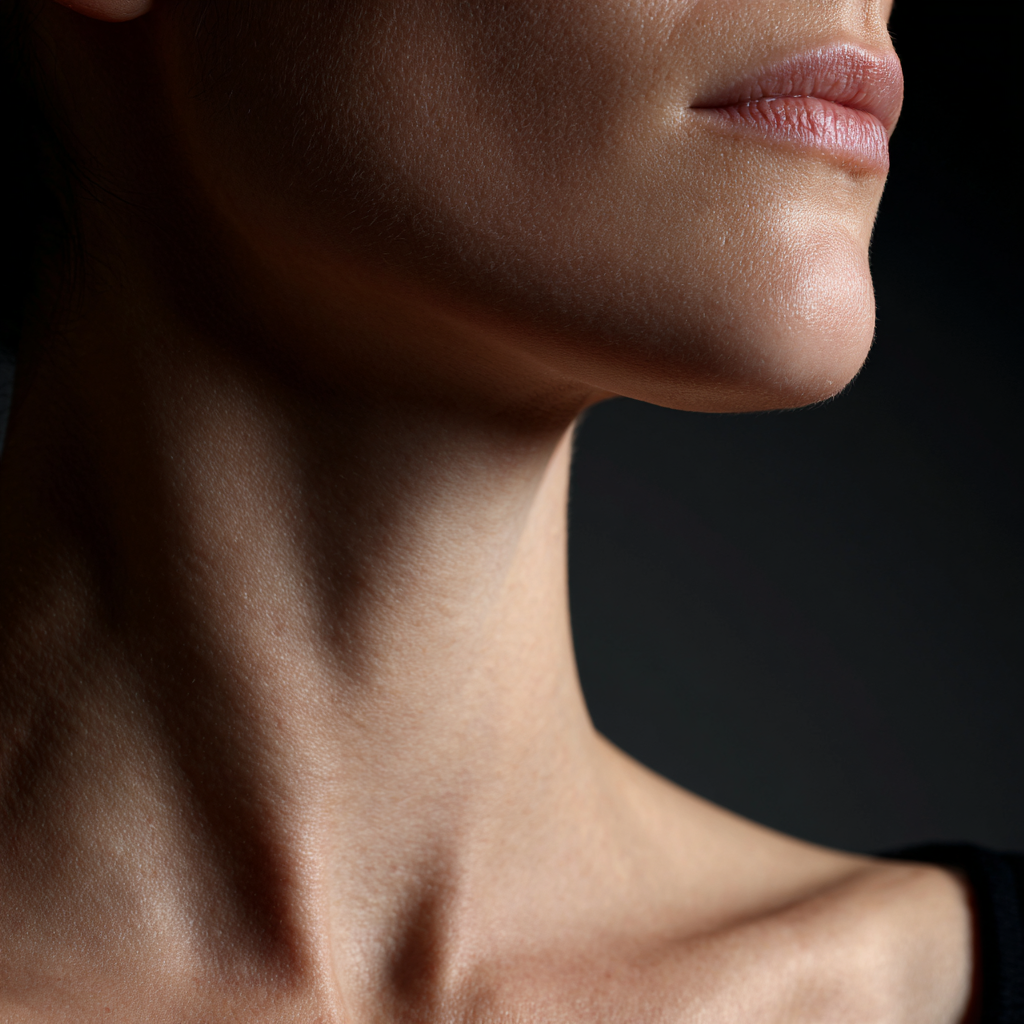

Many patients arrive at the consultation wanting "the Adam's apple removed" without quite knowing what sits behind those words. The Adam's apple is a prominence of the thyroid cartilage, and reducing it means sculpting cartilage millimetres away from the vocal cords. That's why it causes more anxiety than other facial surgeries: the fear isn't about the aesthetic result, it's that something might change in the voice. It's a reasonable fear, and the question that really matters isn't whether the Adam's apple can be reduced, but how it's done without putting the voice at risk.
What exactly this surgery is
Chondrolaryngoplasty (also known as a tracheal shave) reshapes the thyroid cartilage to reduce its forward projection. It isn't about "removing" the Adam's apple, but about lowering and softening its prominence while preserving the attachment of the vocal cords at the midline of the cartilage, at the anterior commissure. Beyond the projection, we also reduce the height of the sculpted cartilage, so the Adam's apple stays less noticeable even when you stretch your neck, a movement that tends to accentuate it. That vocal cord attachment point is the limit that cannot be touched: cutting too low or too deep is what compromises the voice.
Vocal cord control starts before the incision is made
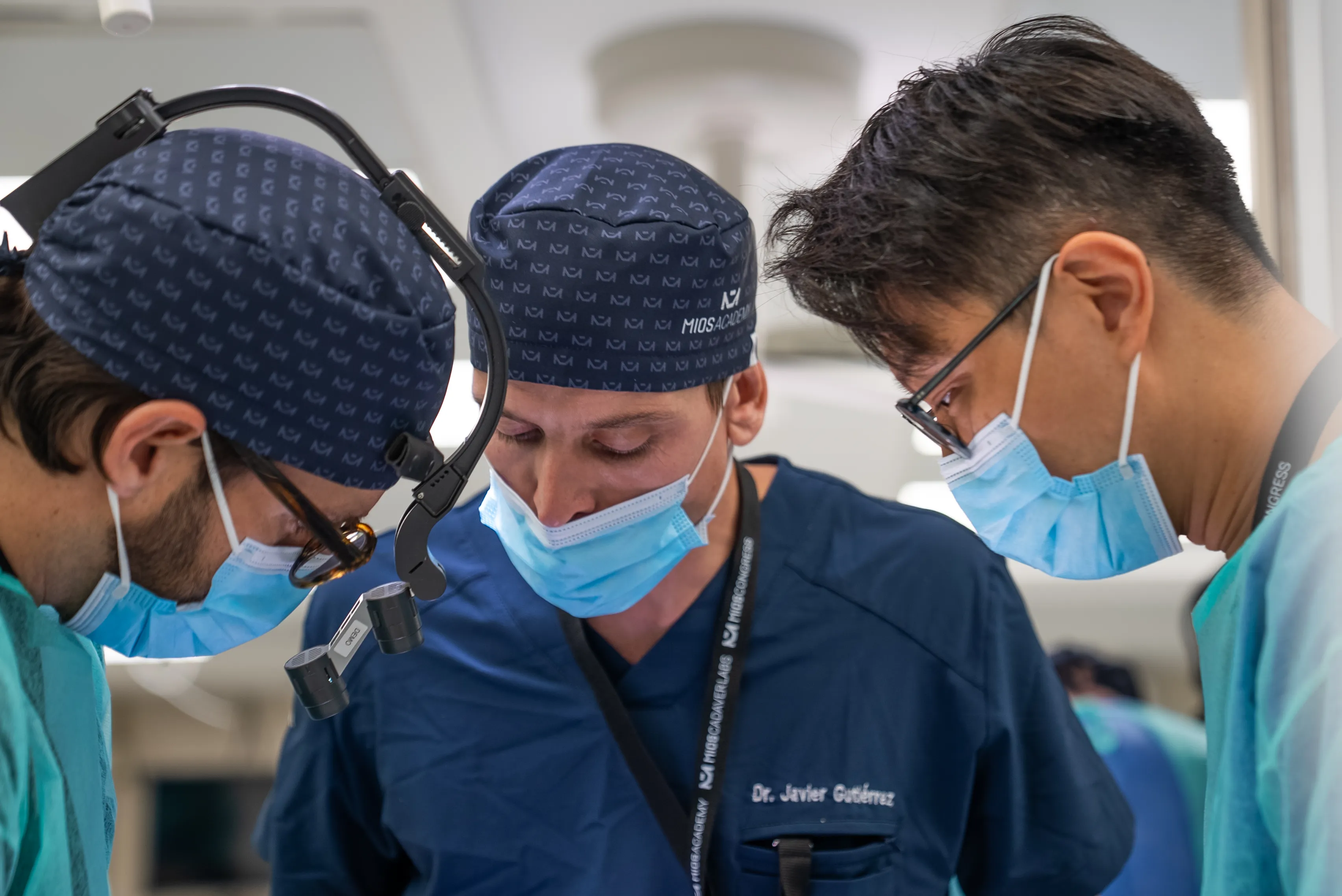
We operate under general anaesthesia, with intubation assisted by video laryngoscope. This allows us to visualise the exact position of the vocal cords before touching the cartilage, and to mark precisely where the safe resection margin ends. It isn't an optional step or an add-on: it's what makes it possible to sculpt with a wide safety margin, instead of working blind on such a sensitive structure.
The incision: why the location matters as much as the size
The most common approach for this surgery is a direct incision over the cartilage prominence itself, on the neck. We work with a submental approach: a 1.5 cm incision in the crease under the chin, on a horizontal plane. Sitting below the jawline, it stays out of the direct frontal field of view. There's no sense in trading one anatomical feature for a visible scar, often more conspicuous than the very Adam's apple you wanted to treat. With healing time (around 6 months), the mark becomes practically imperceptible.
Safety is not negotiable
No aesthetic reduction justifies a poor outcome for the voice. Exact anatomical knowledge of the area, combined with intraoperative marking of the vocal cord position, is what allows us to work with the widest possible safety margin. Aesthetics never come before safety: the health of your voice isn't traded for a smooth neck.
Surgery day
It's a day-case procedure. You come in first thing, the surgery takes roughly an hour, and within about 3–4 hours the patient is walking out of the hospital door.
Recovery
Recovery is quick: by the next day you can go about your normal life, with common sense. You wear a small plaster under the chin, and the wound is closed with a continuous intradermal suture, without knots, designed to minimise any residual mark as much as possible.
In the first days, some swelling and mild discomfort when swallowing are normal. A slight change in the tone of your voice can also appear during the first weeks, while the local swelling reabsorbs; it's temporary and settles as the swelling goes down.
About the cost
It's a surgery with an accessible cost, and that's how we present it: without needing to justify the price with extras that add nothing to the result.
If you're considering it, the consultation is the place to resolve the specific questions about your anatomy and your case.
→ Book your free consultation now