In short: after orthognathic surgery you do not chew for the first two weeks, so that the bone heals in a stable position. The diet goes through three phases: strictly blended food until day 15, croquette consistency until day 30-45 and a gradual return from a month and a half. Hard food never before two months. For the first two weeks the diet should be high in protein and calories, without too much salt and without hot food.
Diet is part of the treatment
After orthognathic surgery, what you eat is part of the treatment, just like the medication or the physiotherapy. Following the guidance helps everything go to plan. Skipping it can put the result of the operation at risk.
These are not arbitrary rules. Each one meets two needs: protecting the bone while it heals and giving the body what it needs to rebuild. We explain the rest of the recovery in our post on orthognathic surgery recovery, week by week.
Why you cannot chew
In orthognathic surgery the bone is cut, repositioned and fixed with plates. From then on, the bone has to heal, and to heal well it needs stability.
Chewing creates micromovements between the bone segments. Those movements can:
- shift the segments out of their planned position;
- break a fixation plate;
- lead to a fibrous callus forming instead of a bony callus, which is a weaker union.
That is why, for the first two weeks, the aim is not to chew. The muscles are kept working with the physiotherapy exercises, not by forcing them at mealtimes.
Why a diet high in protein and calories
Surgery puts the body into repair mode. Rebuilding bone and tissue takes energy and, above all, protein. At the same time, a blended diet is less filling and tends to fall short in quantity. That is why, especially in the first two weeks, the diet should be high in protein and high in calories.
As a reference, a recent study from the University of Padua focused on orthognathic surgery estimates needs of 2,500-3,000 kcal and 1 to 1.5 g of protein per kilo of body weight a day. For a person weighing 60 kg, that is roughly 60-90 g of protein a day. It is a guide, not an individual plan: if you have kidney disease or another medical condition, check before taking protein supplements.
Losing some weight is normal. Studies describe average losses of between 2.5 and 5 kg, mostly in the first two weeks. If you lose more or cannot manage to eat enough, let your team know: high-calorie, high-protein shakes can be added.
What to avoid
- Ultra-processed and very salty food. Salt encourages fluid retention and, with it, swelling.
- Hot food. Heat increases swelling. Lukewarm or cold is better.
- Small grains and seeds. They can get caught in the wounds inside your mouth. Strain strawberry, kiwi or raspberry smoothies.
- Chewing hard too early, even if you feel well.
The three phases at a glance
| Phase | When | Consistency | Examples |
|---|---|---|---|
| 1 · Strictly blended | Days 1-15 | Liquid and blended. No chewing. | Fruit shakes with protein, blended pulse soups, fish purées, smoothies, slushies, ice cream |
| 2 · Croquette consistency | Day 15 to day 30-45 | Soft: mashes with your back teeth without force | Pulses, rice, pasta, boiled fish, minced meat, soaked cereal, omelettes |
| 3 · Gradual return | From day 30-45 | Increased little by little until normal from a month and a half | Tender meat and salads. Hard food never before 2 months and only after a check-up |
These timings are a guide. Every case is different and your surgeon adjusts the plan to how you are progressing.
Phase 1: days 1 to 15, strictly blended
For the first two days you start with liquids and, depending on how you tolerate them, move on to blended food. Until day 15 the diet is strictly blended.
- A blended diet: the same as your usual Mediterranean diet, just put through the blender.
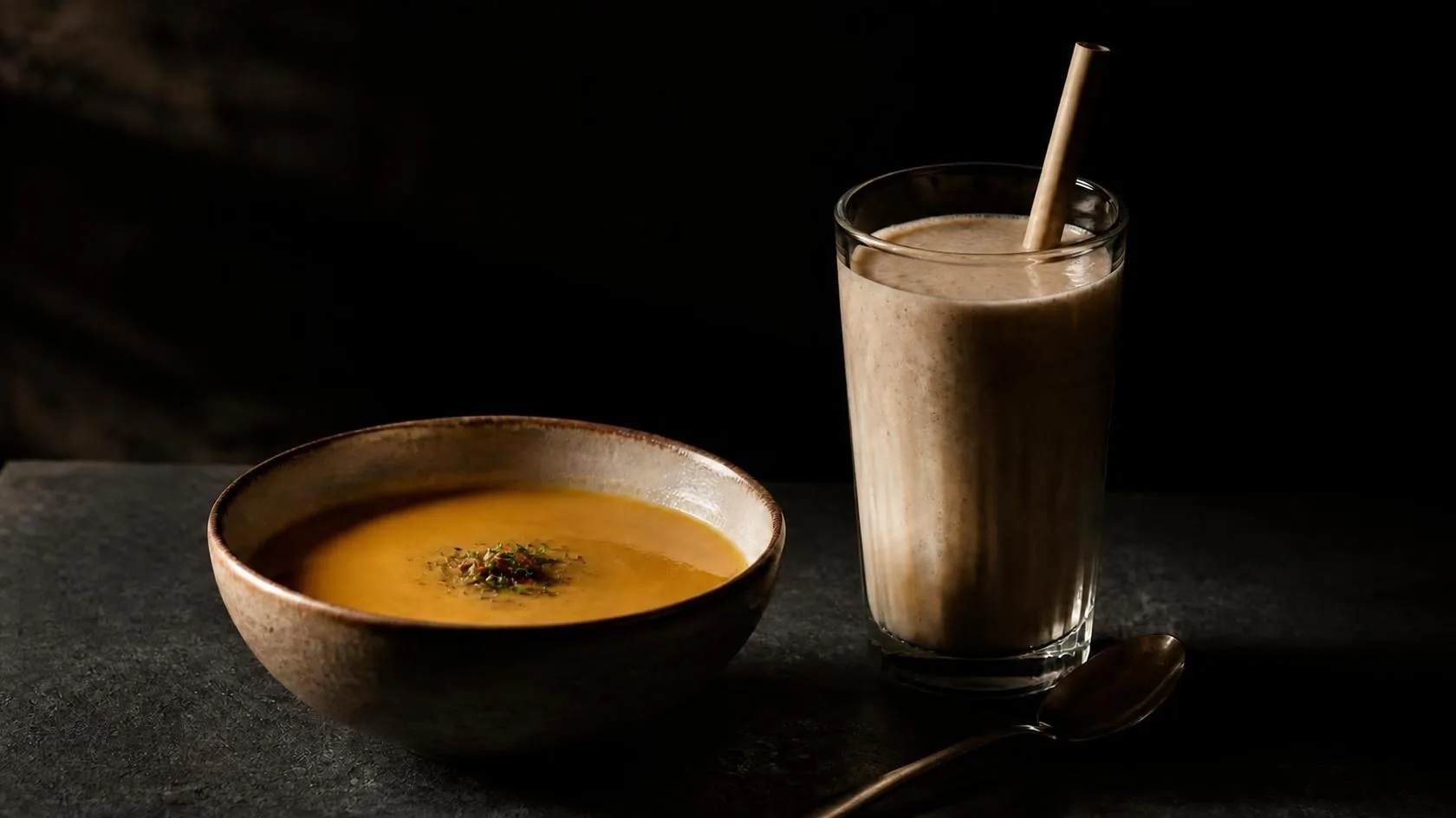
- Fruit shakes with protein, even protein powder, are one of the best tools in this phase. So are smoothies, slushies and ice cream.
- How to eat: a wide-tip syringe, a teaspoon or a straw, ideally a wide one.
- How often: five or six small meals a day, because each one tends to fall short.
- Elastics: always take them out before eating. The order is: remove the elastics, eat, clean your mouth, do your exercises and put them back in.
- After something sweet, such as ice cream or a slushie, rinse your mouth. With braces and limited oral hygiene, sugar raises the risk of tooth decay.
Phase 2: day 15 to day 30-45, croquette consistency
This is soft food that you can mash with your back teeth without any chewing force. Almost everything is allowed: pulses, rice, pasta, boiled fish, minced meat, cereal soaked in milk, omelettes. It is almost a normal diet. The practical rule: if you have to use force to chew it, it is not time yet.
Phase 3: from day 30-45, a gradual return
The consistency is increased little by little, so the diet is back to normal from a month and a half. This is the time to bring in tender meat and salads. Hard food, such as nuts, crusty bread, baguette sandwiches or tough meat, never before two months and always after it has been assessed at a check-up.
And with minimally invasive orthognathic surgery (MIOS)?
The diet is the same. Even though the approach is less invasive, the bone needs the same time and the same stability to heal.
In summary
The diet after orthognathic surgery protects the bone while it heals and gives the body what it needs to rebuild. Follow the phases, prioritise protein, avoid salt and heat, and check any questions with your team. This article is for general information: if you have had surgery, your specific plan is the one your surgeon gives you.
Sample menus
Three typical weeks with a Mediterranean base, one per phase. In phase 1 the week is repeated twice. Everything lukewarm or cold, with extra virgin olive oil as the main fat and little salt.
Phase 1 · Strictly blended (days 1-15)
Everything finely blended. Smoothies with seeds, strained. Before bed, an extra small meal: milk, kefir or drinking yoghurt with a spoonful of protein powder.
| Day | Breakfast | Mid-morning | Lunch | Afternoon snack | Dinner |
|---|---|---|---|---|---|
| 1 | Shake of banana, fine oat flakes, milk and protein | Greek yoghurt whipped with honey | Lentil and carrot soup with extra virgin olive oil | Mango and kefir smoothie | Courgette soup with hake |
| 2 | Shake of cocoa, milk, banana and protein | Melon slushie | Chickpea and pumpkin soup with a little cumin | Homemade custard | Vichyssoise with blended hard-boiled egg |
| 3 | Strained strawberry shake with yoghurt and protein | Apple compote with cinnamon | Mashed potato with desalted salt cod | Frozen yoghurt | Chicken soup with rice and vegetables |
| 4 | Shake of pear, fine oats, milk and protein | Whipped fresh cheese with peach | Salmorejo (cold tomato soup) without vinegar, with blended hard-boiled egg | Banana and peanut butter smoothie | Leek and potato soup with salmon |
| 5 | Shake of lukewarm coffee, milk, banana and protein | Drinking yoghurt | White bean soup with vegetables and chicken | Coffee and milk slushie | Pumpkin soup with fresh cheese |
| 6 | Strained berry shake with kefir and protein | Homemade crème caramel | Pea soup with chicken | Vanilla ice cream | Blended fish soup |
| 7 | Shake of mango, yoghurt and protein | Pear compote | Vegetable soup with hake and potato | Peach and yoghurt smoothie | Mushroom soup with chicken |
Phase 2 · Croquette consistency (day 15 to day 30-45)
Everything should be easy to mash with your back teeth, without force. Boneless fish, meat always minced.
| Day | Breakfast | Lunch | Afternoon snack | Dinner |
|---|---|---|---|---|
| 1 | Oat flakes soaked in milk with mashed banana | Well-cooked lentil stew with vegetables | Yoghurt with small pieces of soft fruit | French omelette with baked courgette |
| 2 | Soft scrambled eggs and crustless sliced bread dipped in milk | Soupy rice with hake | Fruit shake with protein | Boiled hake with potato and extra virgin olive oil |
| 3 | Greek yoghurt with soaked cereal | Well-cooked macaroni with minced meat and tomato | Fresh cheese with honey | Scrambled eggs with mushrooms and chopped prawns |
| 4 | Fruit shake with protein and a soaked homemade sponge cake | Chickpeas with spinach | Homemade custard | Tender meatballs in sauce with mashed potato |
| 5 | Oat flakes with apple compote | Thin noodles with fish (like a thick noodle soup) | Hummus with cooked carrot | Moist Spanish potato omelette |
| 6 | Scrambled eggs with avocado | Mushroom risotto with minced chicken | Mashed banana with yoghurt | Homemade salt cod croquettes, lightly browned, with vegetable soup |
| 7 | Yoghurt with soft fruit and soaked oats | Baked aubergine stuffed with minced meat | Fruit shake with protein | Steamed salmon with pumpkin purée |
Phase 3 · Gradual return (from day 30-45)
Tender meat and salads with tender leaves come in. Breakfasts and afternoon snacks as in phase 2, with soft bread. Nothing hard before 2 months or without a check-up.
| Day | Lunch | Dinner |
|---|---|---|
| 1 | Chicken stew with vegetables and rice | Salad of tender leaves with peeled tomato and hard-boiled egg |
| 2 | Very tender beef stew with potato | Baked sea bream with courgette |
| 3 | Chickpeas with salt cod | Spinach omelette with a tender salad |
| 4 | Pasta with salmon and light cream | Juicy grilled turkey breast in small pieces, with purée |
| 5 | Lentils with vegetables | Steamed sea bass with potato and a tender salad |
| 6 | Rice with chicken and tender artichoke | Scrambled eggs with courgette and fresh cheese |
| 7 | Fish balls in green sauce | Vegetable soup and shredded stewed chicken |
Frequently asked questions
How long do you have to eat blended food after orthognathic surgery?
Generally, about two weeks. For the first two days you take liquids, then you move on to strictly blended food until day 15. Your surgeon sets the exact timing depending on how you are progressing.
Why can you not chew after orthognathic surgery?
Because chewing moves the bone segments while they heal. Those micromovements can shift them, break a plate or lead to a fibrous callus instead of a bony one.
When can you eat normally again after orthognathic surgery?
The diet gradually returns to normal from a month and a half. Hard food, such as nuts, crusty bread or tough meat, never before two months and always after it has been assessed at a check-up.
What is the "croquette consistency" diet?
It is the soft diet phase, roughly from day 15 to day 30-45. It includes food you can mash with your back teeth without force: pulses, rice, pasta, boiled fish, minced meat or omelette.
How much weight do you lose after orthognathic surgery?
It is normal to lose between 2.5 and 5 kg, mostly in the first two weeks. A diet high in protein and calories aims to limit it. If you lose more, let your team know.
How much protein do I need after orthognathic surgery?
As a general guide, at least 1 to 1.5 g per kilo of body weight a day. For a person weighing 60 kg, that is about 60-90 g a day. If you have kidney disease, check before using supplements.
Can I have protein powder shakes?
Yes, and they are very useful in the first two weeks. Mixed with fruit and milk, yoghurt or kefir, they help you reach the protein your body needs.
Can I use a straw after orthognathic surgery?
Yes, ideally a wide one. You can also eat with a wide-tip syringe or a teaspoon.
Can I have ice cream and slushies?
Yes. As well as providing calories, the cold is soothing. Rinse your mouth afterwards, because sugar with braces raises the risk of tooth decay.
Why can the food not be hot?
Because heat increases swelling and raises the risk of bleeding. For the first few days, lukewarm or cold is better.
Do I have to take the elastics out to eat?
Yes, always. The order is: remove the elastics, eat, clean your mouth, do your exercises and put them back in.
Is the diet different after minimally invasive orthognathic surgery (MIOS)?
No. The diet is the same as after conventional orthognathic surgery, because the bone needs the same stability to heal.
References
- Bissolotti G, Valentini R, Cavalli G, et al. Nutrition after orthognathic surgery: Evaluation of anthropometric measurements and body composition in subjects undergoing orthognathic surgery with nutritional management. Mediterranean Journal of Nutrition and Metabolism. 2026;19(2):204-211. doi:10.1177/1973798X261429004
- Ooi K, Inoue N, Matsushita K, et al. Factors related to patients' nutritional state after orthognathic surgery. Oral and Maxillofacial Surgery. 2019;23(4):481-486. Hokkaido University repository
- Mogensen TM, Nielsen MG, Bruun NH, et al. Systematic Dietary Interventions to Minimize Postoperative Weight Loss Following Orthognathic Surgery: a Randomized Controlled Trial. J Oral Maxillofac Res. 2026;17(2):e4. Full text
→ Book your free consultation now