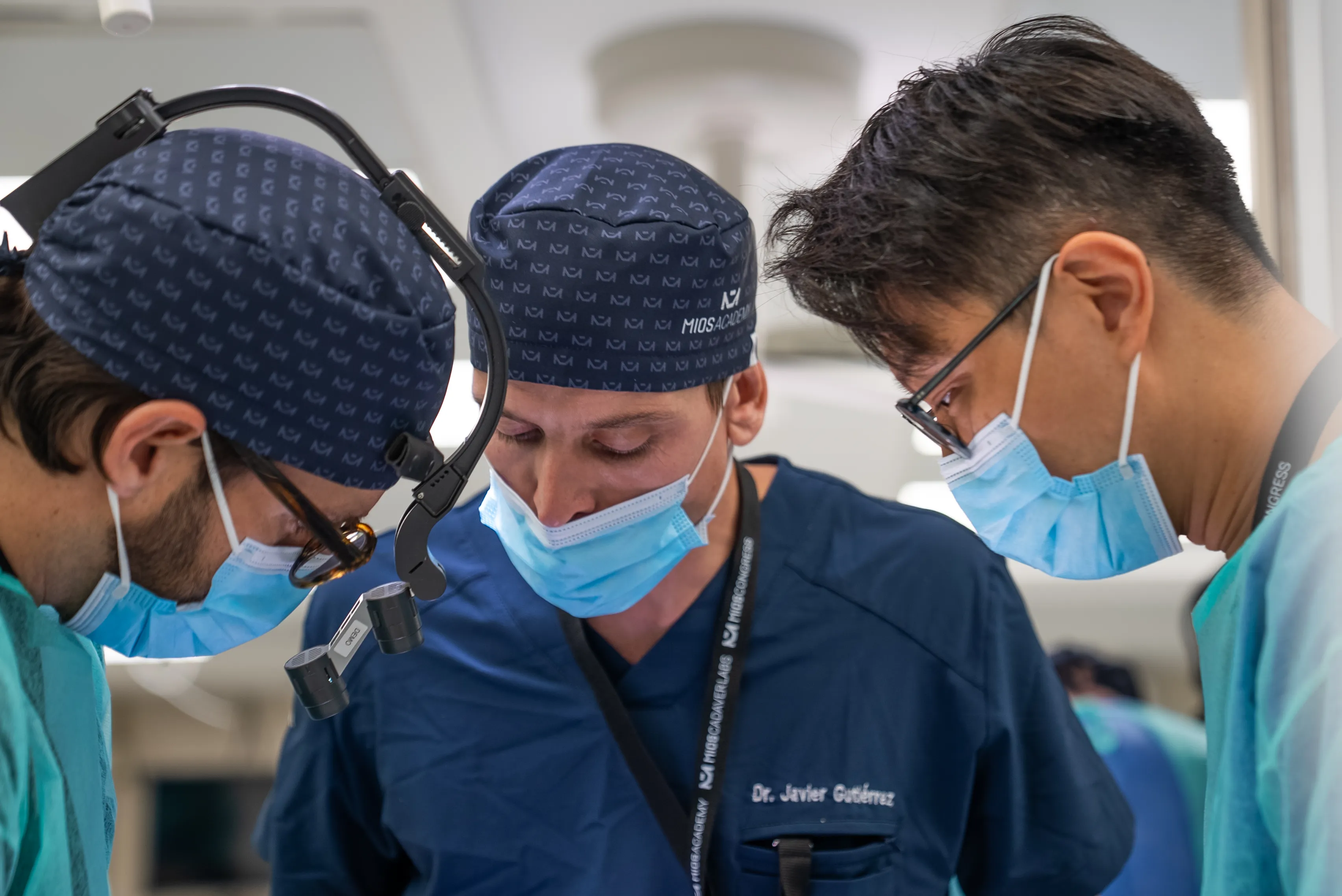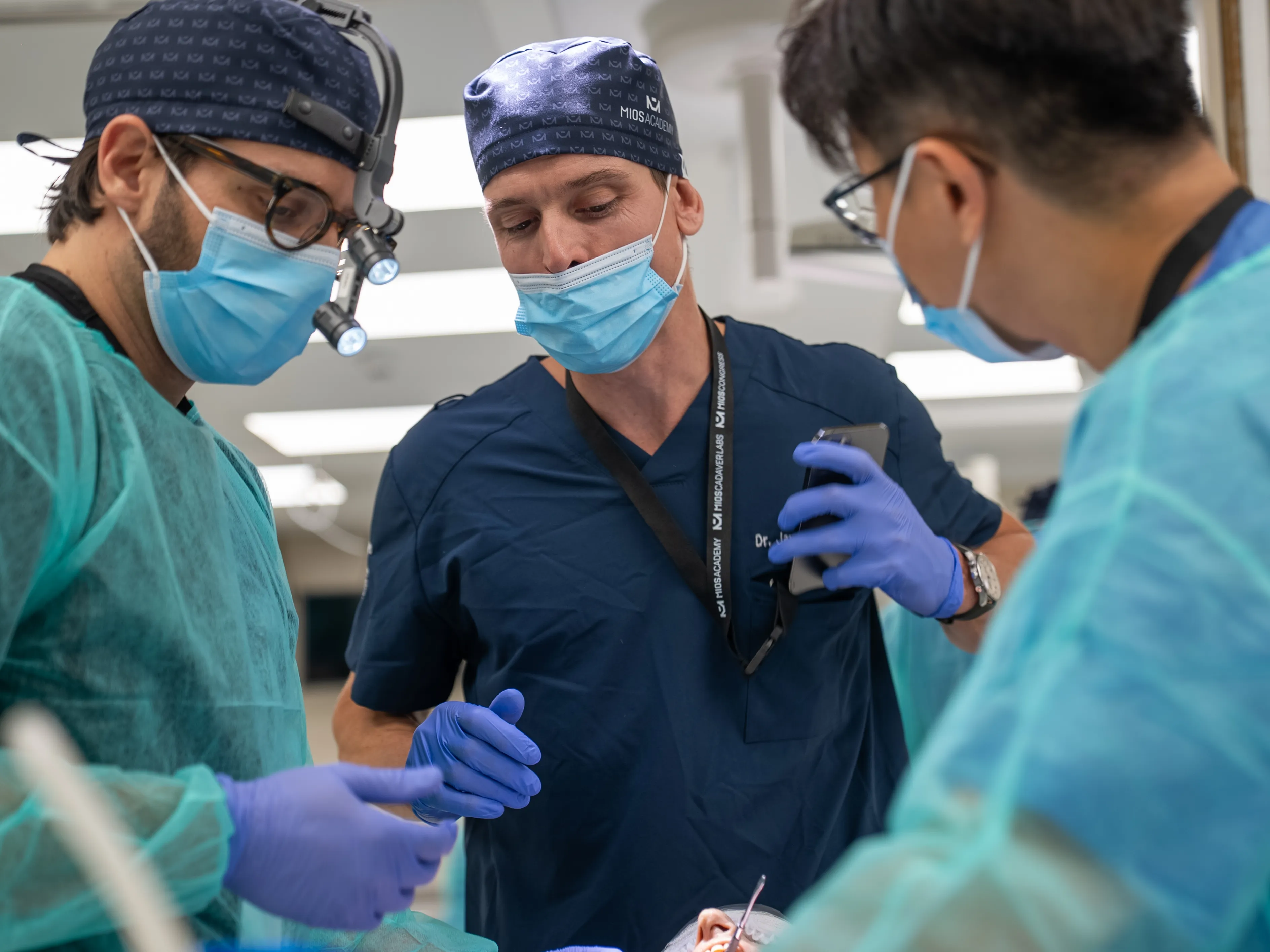
For years, orthognathic surgery has dragged along a reputation that doesn't do it justice: months of recovery, a very swollen face, weeks unable to speak or eat normally. That image reflects how this surgery used to be done, not how it can be done today. At ARQÉA we work with an evolved approach to this surgery, brought together under the concept of MIOS (minimally invasive orthognathic surgery), which is also part of what we teach at MIOS Academy, the training project we drive to bring these techniques to residents and surgeons who want to take their practice a step further.
What really changes with the minimally invasive approach
Conventional orthognathic surgery involves wide dissection of the muscles and soft tissues to reach the bone. The more dissection, the more bleeding, the more swelling and the more time the body needs to recover. The MIOS approach aims to reduce that dissection to the minimum necessary, preserving muscle attachments and blood supply whenever the technique allows.
The difference isn't cosmetic: less muscle dissection translates into less intraoperative bleeding, less postoperative swelling and, in our experience accumulated over more than a decade and several hundred operated patients, into more favourable bone and soft-tissue healing. That's what makes it possible to shorten recovery without compromising the precision of the result.
3D planning: every case, made to measure
One of the pillars of this approach is three-dimensional virtual planning. Before entering the theatre, the case is designed digitally: the exact bone movement to be performed is defined, in all three planes of space, on the patient's own 3D model.
That planning is then translated into 3D-printed cutting guides and osteosynthesis plates, custom-made for each case. The result is a surgery that reproduces in theatre, with high fidelity, what was designed beforehand on the computer, reducing the margin for intraoperative improvisation and, with it, the risk associated with on-the-fly adjustments.
The ERAS protocol: how the patient wakes up matters too
The surgical part isn't the only one we've rethought. We follow an ERAS (Enhanced Recovery After Surgery) anaesthesia protocol, aimed at improving the patient's comfort before, during and after the operation, from pain management to postoperative nausea, two of the factors that most shape how the first week after surgery feels.
From months to weeks: what this means for the patient
With this combination (minimally invasive approach, 3D planning and ERAS protocol), what traditionally meant months of readaptation translates, in our team's accumulated experience, into a process of 3 to 4 weeks until you're back to your usual rhythm of life. It isn't a universal promise, since every patient and every type of bone movement has its own recovery curve, but it does reflect what we've observed consistently in clinical practice.
In favourable cases, this means speaking, eating progressively and walking normally from the first days, without the prolonged restrictions that for years have been associated with this surgery.
More options, not a single path
Evolved orthognathic surgery isn't just the surgical part: it also means rethinking how it coordinates with orthodontics. We work with surgery first, surgery early or surgery only protocols, as each case allows, and adapt the type of orthodontics (from no prior orthodontics at all to aligners, aesthetic or conventional braces) to each patient's needs and rhythm of life, instead of imposing a single protocol on everyone.
Why we teach it, as well as practise it
This approach isn't born of theory: it rests on more than ten years of practice and several hundred cases. That's why, beyond applying it at ARQÉA, we share it through MIOS Academy, with the goal that these techniques, today available in very few centres in Spain, reach more surgeons and, through them, more patients.
If you're considering orthognathic surgery and want to know whether your case is a candidate for a minimally invasive approach, we can assess it at a consultation with your personalised 3D plan.
→ Book your free consultation now