Many patients who need both orthognathic surgery and facial feminisation arrive at the consultation with the same question: whether they can have both in a single operation. It's a reasonable question, but there's a more important one first: how each surgery affects the result of the other, and what happens depending on the order in which they're done. There's no single answer, but there are clinical criteria that make it possible to decide well in each case.
What orthognathic surgery is and how it differs from feminisation
Orthognathic surgery repositions the upper and lower jaw bones to correct the dental occlusion and rebalance the proportions of the middle and lower thirds of the face. Its indication is functional: class III or class II malocclusions, skeletal asymmetries, sleep apnoea of skeletal origin... It has aesthetic effects, sometimes significant ones, but it isn't feminisation surgery.
Lower-third feminisation works on the shape of the bone without moving the teeth: it reduces the height of the jaw, modifies the angles, slims the mandibular body and reshapes the chin. They are, then, two operations on the same territory, with different goals, sharing surgical access points.
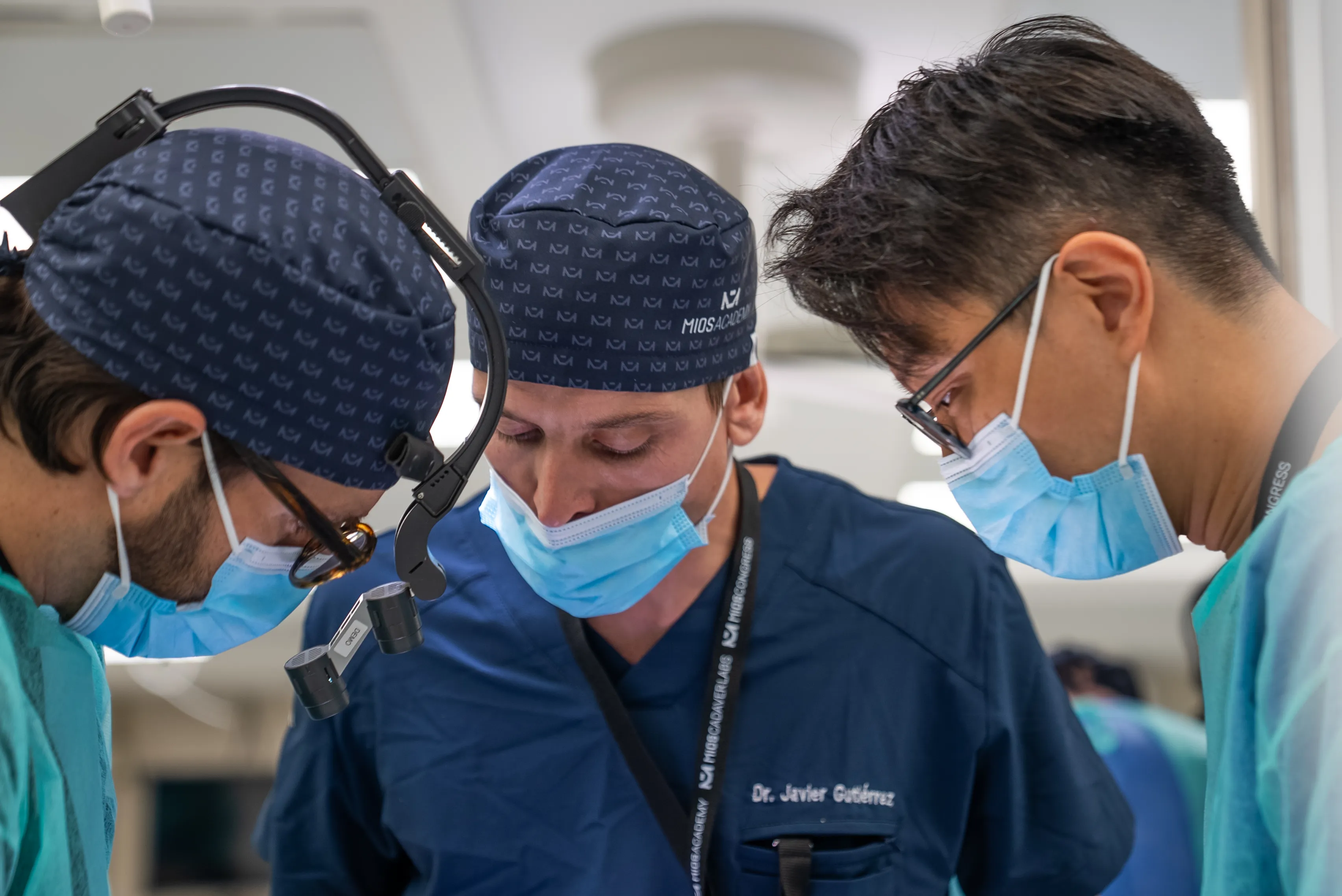
I perform orthognathic surgery with a minimally invasive approach (MIOS). In the context of combinations with feminisation, that approach helps the patient tolerate the overall procedure better.
Are they compatible? Yes, though not always at the same time
Neither surgery closes the door on the other. Jaw feminisation doesn't prevent later orthognathic surgery, because it works on the basal cortical bone and not on the position of the teeth. And orthognathic surgery doesn't prevent later feminisation. They're compatible in either order.
What does have consequences is the order.
- If you feminise first, you're modifying a bone that isn't yet in its final position. In significant malocclusions, the result of that feminisation can be altered when orthognathic surgery later moves the structure that was already worked on. It isn't necessarily irreversible, but it can mean repeating part of the work, or mean that the initial result isn't the final one.
- If orthognathic surgery comes first, the bone is set in place, and later feminisation works on an already stabilised structure, which makes the plan more predictable. In most cases, six months after orthognathic surgery is enough to plan feminisation on stable tissues. With more complex movements that margin lengthens, but that isn't the norm.
The surgery-first protocol: when it applies
There is an alternative to prior orthodontic preparation: the surgery first protocol, in which surgery is performed without first decompensating the occlusion with orthodontics. It's a valid option in selected profiles, but it demands very precise virtual planning and strict coordination with the orthodontist in the immediate postoperative period, which is when teeth move fastest.
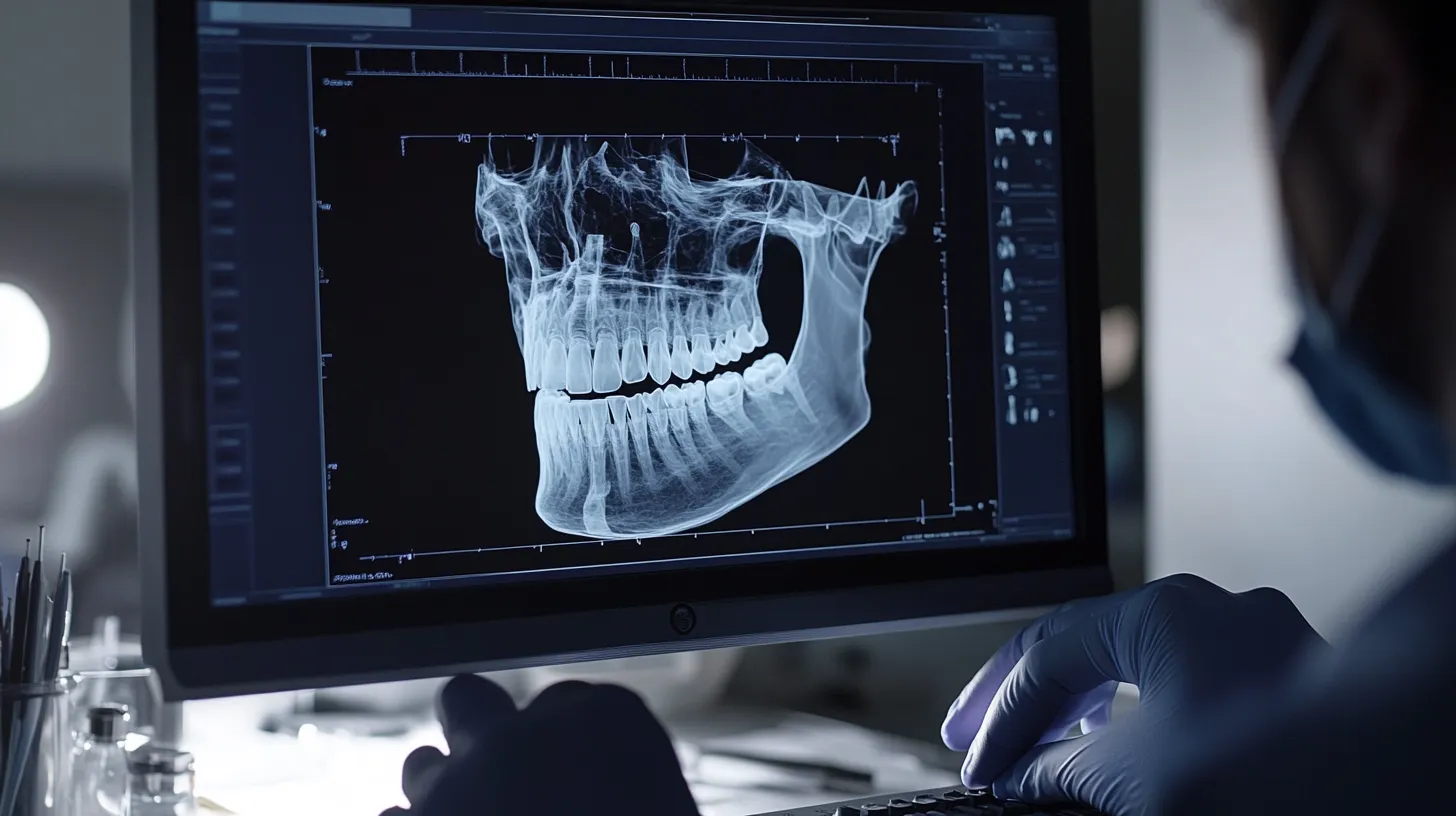
At ARQÉA, orthognathic cases are planned on a 3D model built from a CBCT scan, with custom cutting guides. Which protocol to follow depends on the analysis of each case, not on a preference fixed in advance.
Combining both surgeries in one session: when it's reasonable
It's possible in selected cases, and the decision rests on two criteria.
The first is total surgical time. Beyond nine or ten hours under general anaesthesia the risk rises significantly: that's the point at which the anaesthesia team, the tissues and the patient's own capacity to recover start to suffer. If the sum of procedures goes past that, splitting into two sessions is safer and usually gives a better result.
The second is technical compatibility. Some procedures combine well with orthognathic surgery in the same session: the tracheal shave, the forehead, the hair transplant. Rhinoplasty requires specific assessment: when orthognathic surgery involves maxillary advancement, the bony floor the nose rests on changes, and that can affect the predictability of the nasal result. It isn't an absolute incompatibility. We carry out rhinoplasty with Dr Ramón Tarragona, and direct coordination between the two surgeons makes it possible to assess case by case whether the combination is workable, depending on the type and magnitude of the maxillary movement, the nasal goals and the sequence within the session. In some cases we do it; in others it makes no sense. That decision is made on the 3D plan.
Jaw feminisation combined with orthognathic surgery has one concrete advantage: the jaw bone is accessed only once, through the same intraoral approaches, which reduces the accumulated recovery. When the indication allows it, it's a reasonable combination.
Orthognathic recovery: what to know before deciding
Orthognathic recovery has particularities that many patients underestimate:
- A blended diet for the first 3–4 weeks, and soft food until the two-month mark.
- Close orthodontic follow-up in the first weeks, with frequent check-ups.
- Significant swelling in the first days.
- If you live outside Barcelona, the minimum postoperative stay is two weeks. It isn't a matter of comfort: it's the time the team needs to supervise initial bone consolidation and joint function before you travel away from the centre.
If you're going to combine orthognathic surgery with other feminisation procedures, the accumulated recovery will be more demanding. Not impossible, but it has to be planned honestly.
The orthodontist's role
In an orthognathic case, coordination with the orthodontist isn't optional: it's part of the treatment.
Before surgery, the teeth have to be in the position that allows the planned bone movement to be executed. That takes time and requires the orthodontist to know exactly what the surgeon is going to do, in order to decompensate in the right direction. After surgery, the immediate period is when teeth move most easily, and making the most of it requires an orthodontist who is active from the first weeks. Without experience in surgical cases, the final result may not be the one planned.
For international patients, this means having a trusted orthodontist in your own country before starting, and opening a direct channel of communication between that professional and the surgeon. We organise it from the start of the plan, not as an afterthought.
Criteria at a glance
A note on the chin
The chin can be modified in either context. Both a sliding genioplasty and a telescopic one integrate well into orthognathic surgery or feminisation, with equivalent results. There's no reason to necessarily save it for one phase or the other: the decision depends on which procedure is the main one and on the 3D planning of that case.
If you're unsure about your situation (whether you need orthognathic surgery, whether you've already had it, or whether to consider combining them), the consultation is the place to resolve it, with your CBCT in front of us and a concrete plan on the table.
→ Book your free consultation now